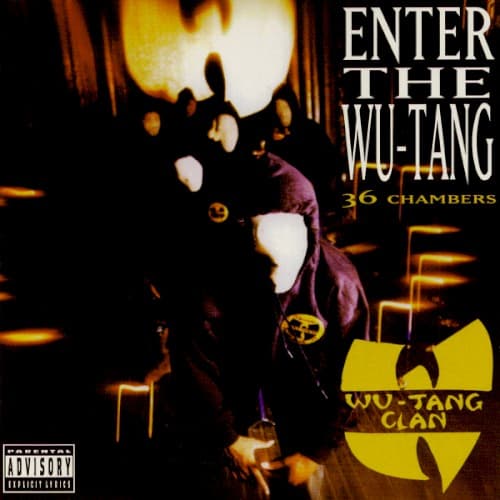
Wu-Tang Clan Enter the Wu-Tang (36 Chambers) — Nine Voices, One Revolution
Remove this album from the timeline and half the underground rap movement disappears overnight. No Def Jux. No Rhymesayers. No Stones Throw as we know it. The entire aesthetic of lo-fi grimy New York rap—the sound that refused to get shiny when Puff wanted everything to sparkle—starts here. East Coast hip-hop was bleeding out when this landed. G-funk owned radio. New York had no answer to Snoop or Dre, and the boroughs were watching their cultural dominance slip to California. Then came nine dudes from Staten Island with kung fu samples and the filthiest drums anyone had heard since PE's Bomb Squad went silent.
The Wu-Tang Clan did not arrive polite. They kicked the door in with a sound so raw it made premier productions sound like they had been mixed in a spa. RZA's basement production philosophy—sample everything, polish nothing—became the blueprint for every rapper who wanted to sound hungry instead of comfortable. What makes this album untouchable is not just the sound but the structure: nine separate voices, nine separate styles, all locked into one vision. No one had tried that before. No one has done it better since.
Does any other debut contain this many future legends? Method Man became a movie star. Ghostface became the best pure rapper of his generation. GZA and Raekwon built solo careers that would be career peaks for anyone else. RZA became the most influential producer East Coast rap ever made. And they all showed up fully formed on the same album.
This is not nostalgia talking. Play this next to anything from the last five years and it still sounds harder, stranger, more desperate. The hunger never left the recording.
Basement Alchemy and the Sound of Shaolin
RZA did not have a budget so he invented a philosophy. Sample old soul records. Chop them until they sound haunted. Layer them over drums so heavy they distort. Add kung fu movie dialogue because why not. The result is a sound no one had heard before: murky, claustrophobic, violent, and somehow spiritual. Every beat sounds like it was recorded in a concrete room with one working light bulb.
The production is not technically perfect and that is the point. The low fidelity gives everything texture. You hear the tape hiss. You hear the sample crackle. You hear the room where they recorded it. Modern producers spend thousands to remove that grit. RZA built an empire on it. His drums hit like someone dropping cinder blocks on sheet metal. His basslines rumble low enough to rattle car doors. His samples never resolve cleanly—they loop just off-center, keeping everything unstable.
Lyrically this is street rap with a completely different vocabulary. Instead of champagne and leather interiors you get chess metaphors, martial arts philosophy, Five Percent Nation mathematics, and comic book references. The Wu flipped the script on what a gangsta rapper was supposed to sound like. They were still talking about violence and survival but through the lens of kung fu flicks and comic books. It sounds like nerd rap until you realize they are describing the same block Nas' Illmatic was rapping about—they just found a different language for it.
The weak point if there is one is that the album moves so fast some verses blur together. With nine voices fighting for space certain members get lost in the chaos. U-God barely appears. Masta Killa shows up once. But that is a structural problem not a quality problem. Every verse that does appear is sharp. Method Man's charisma jumps through the speakers. Ghostface's abstract storytelling feels like fever dreams. Inspectah Deck delivers the most quotable sixteen bars in rap history on one track alone.
What aged perfectly is the rawness. Every trend in hip-hop since has moved toward cleaner mixes and more polished vocals. This album still sounds like it was recorded on a four-track in someone's basement because it was. That DIY energy never gets old. It is the sound of nine men who had nothing to lose and everything to prove.
The Sequence That Ended the Drought
The opening stretch moves like a kung fu fight scene: quick cuts, no wasted motion, constant tension. The album does not build slowly. It starts at full aggression and maintains that energy for thirty-five minutes. By the time the first three tracks finish you either understand what the Wu are doing or you never will. There is no easing in.
The middle section is where the album shows range without losing edge. You get battle raps, street narratives, and conceptual exercises all within four tracks. The sequencing never lets you settle. Just when you think you have figured out the Wu's formula they switch modes. A posse cut leads into a solo showcase leads into a darker narrative track. The momentum never drops because RZA understood that variety and intensity are not opposites.
The back half could have sagged under the weight of so much earlier firepower but the Wu saved some of their hardest material for the closing run. The final stretch reminds you why this album mattered in the first place: nobody else sounded this raw, this hungry, this willing to ignore every rule about how a rap album was supposed to be constructed. Other groups were trying to make hits. The Wu-Tang Clan made a statement. The sequencing reflects that priority—every track feels like it earned its placement through sheer force.
The Album That Saved New York and Invented a Movement
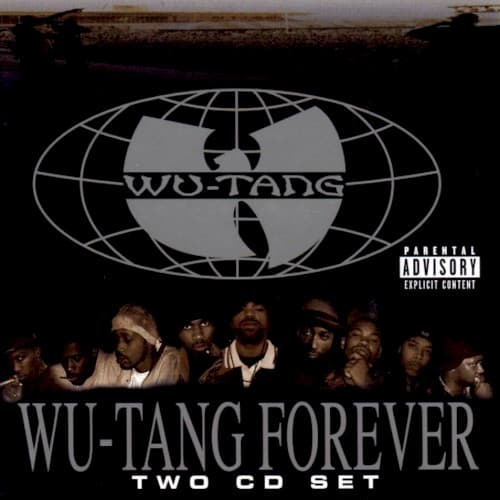
This is the best debut in hip-hop history and the second or third best rap album ever made. Only Illmatic and maybe one or two others belong in the same conversation. Within Wu-Tang Clan's discography this sits at the top. Some fans argue for Liquid Swords, Only Built 4 Cuban Linx, or Wu-Tang Forever but those are either solo albums or lack the raw debut hunger. As a group statement nothing Wu-Tang ever did hit this hard again.
Who should listen: anyone who wants to understand where underground hip-hop came from. Anyone who thinks modern trap invented gritty street rap. Anyone who wants to hear what hunger sounds like on record. This is required listening for fans of Griselda, early Def Jux, vintage Rawkool, or any artist who chose raw over polished. If you liked the production on Madvillainy or Vaudeville Villain you need to hear where MF DOOM got his aesthetic blueprint.
Who might not enjoy it: listeners who need pristine vocal clarity or radio-ready hooks. This album sounds like it was recorded in a basement because it was. If you need clean high-fidelity mixes or melodic hooks this will feel abrasive. Fans of more accessible East Coast rap like Tribe Called Quest or De La Soul might find the Wu too aggressive and unpolished.
Essential tracks for first-time listeners: C.R.E.A.M. remains the most accessible entry point and the biggest cultural moment. Method Man showcases the group's charisma at full strength. Protect Ya Neck is the mission statement. Start with those three and you will know if the rest is for you.
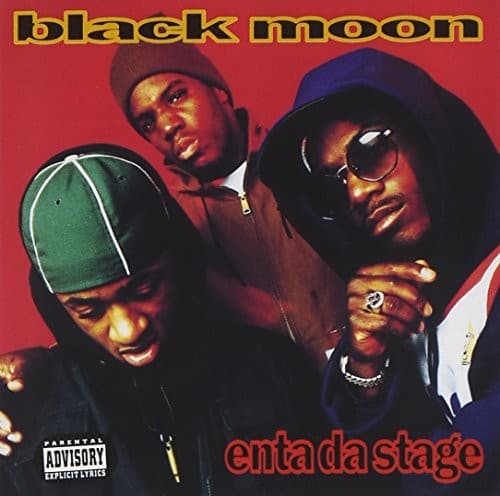
Similar albums to explore: Gravediggaz 6 Feet Deep for more RZA production in a horrorcore context. Onyx Bacdafucup for a similarly raw and aggressive East Coast sound from the same year. Mobb Deep's The Infamous for the next evolution of grimy New York street rap. Black Moon Enta da Stage for another early example of basement-aesthetic boom bap.
The influence is everywhere. Every lo-fi rap album of the last thirty years owes something to this. Every underground artist who chose independence over major-label polish followed the path the Wu carved. They proved you could sell records without compromising the sound. They proved a crew could function as a brand. They proved Staten Island had something to say when everyone thought hip-hop lived in Manhattan, Brooklyn, and Queens. Most importantly they saved East Coast rap when it looked like the West had won for good.
Thirty years later this still sounds like the future.
Track Listing
Shame on a Nuh
▲The album announces itself with a kung fu sample and then ODB screaming like a man on fire. No slow build. No intro skit that goes on too long. Just immediate chaos. Dirty's voice sounds unhinged from the first bar—slurred, off-beat, half-sung, completely unpredictable. He is not trying to sound cool. He is trying to sound dangerous. RZA's beat is all dissonance and tension, a looped piano stab that never resolves and drums that feel like they are stumbling forward. This is not the best song on the album but it is the perfect opening statement: if you cannot handle this energy turn back now. The rest will only get rawer.
Clan in da Front
▲GZA takes lead and immediately raises the lyrical bar. His delivery is ice cold, every word enunciated with surgical precision. He is not shouting. He is lecturing. The beat matches his energy: minimalist, haunted, built around a simple piano loop and cavernous drums. This is where you first hear how different the Wu sound from everyone else. No funk samples. No party energy. Just gray concrete and black hoodies. GZA's verse about the Clan's dominance is not bragging—it is reporting facts. He sounds like a war correspondent describing an invasion. RZA and Inspectah Deck add solid supporting verses but GZA owns this one front to back.
Can It Be All So Simple
▲The first moment of reflection on an album that mostly operates at throat-grabbing intensity. Gladys Knight and the Pips supply the soul sample and suddenly the Wu sound human instead of superhuman. Raekwon and Ghostface trade verses about childhood poverty and the drug game, but instead of glorifying the lifestyle they sound exhausted by it. Rae's storytelling is vivid and specific: you see the apartment, you smell the hallway, you feel the winter cold. Ghostface's verse moves more abstractly but hits just as hard emotionally. The hook is pure longing. This is the template for every mafioso rap song that followed: opulent nostalgia wrapped around ugly memories. The beat rides that Gladys sample all the way to the end and never gets tired.
Method Man
▲The star-making performance. Method Man had charisma that jumped through radio speakers and this is the track that proved it. The beat is hypnotic—a soul loop chopped and flipped until it sounds underwater, bass heavy enough to vibrate ribs. Meth's flow is effortless, every line landing exactly on beat without sounding rigid. He is funny, threatening, and somehow laid-back all at once. The torture-skit intro is juvenile but the song itself is untouchable. This became the first Wu-Tang single and it makes perfect sense why: it is the most accessible moment on an album that mostly refuses to make things easy. Meth sounds like a star before anyone knew who he was. You can hear the movie career coming.
Da Mystery of Chessboxin'
▲The deepest posse cut on the album and maybe the deepest posse cut ever recorded. Six Wu members trade verses over a beat that sounds like it is collapsing in on itself. U-God opens with one of his only appearances on the album and holds his own. Inspectah Deck follows with a verse so dense with wordplay and internal rhyme it demands repeat listens. Raekwon comes through with mafioso imagery. Ghostface delivers abstract street cinema. GZA closes with chess metaphors and martial arts philosophy. Every verse is different but they all lock into the same dark energy. RZA's production is disorienting—the sample flips unexpectedly, the drums drop out at strange moments, nothing stays stable. It sounds like a nightmare you cannot wake up from. This is the Wu at their most uncompromising.
Wu‐Tang Clan Ain't
▲If you want to understand what made the Wu-Tang Clan different from every other crew this is the track. Pure aggression. Zero compromise. The hook is a threat. The verses are threats. The beat is a threat. RZA's production strips everything down to drums and a barely-there bass rumble. No melody. No relief. Just nine dudes telling you exactly what happens if you test them. Every member who appears sounds genuinely dangerous. This is not performative tough talk—it is the sound of men who had nothing and decided to take everything. The energy is relentless. Some albums have a track like this to show range. For the Wu this is the baseline. They exist at this level of intensity and everything else is them showing mercy.
C.R.E.A.M.
▲The anthem. The crossover moment. The song that made suburban kids understand what growing up broke in the projects actually meant. Raekwon and Inspectah Deck each deliver one verse of autobiography that hits harder than most rappers' entire albums. Rae talks about stickups and survival with no romanticism. Deck talks about watching his friends die and feeling powerless to stop it. The piano loop is one of the most recognizable in hip-hop history—mournful, simple, devastating. The hook is six words that summarize an entire economic system. This song made the Wu-Tang Clan famous and it deserved to. Not because it is their best song—it might not even be top three—but because it distilled everything they represented into four minutes. The acronym became a lifestyle. The song became a mission statement. Thirty years later it still sounds like the realest thing anyone ever put on wax.
Protect Ya Neck
▲The original mission statement and still the hardest posse cut the Wu ever recorded. Every member gets a verse. Every verse is a knockout. The beat is violent and minimal: a horn stab, a drum break, and nothing else. No bassline. No melody. Just space for nine voices to prove they belong. This was the underground single that got the Wu signed in the first place and you can hear why. The hunger is undeniable. RZA recorded this in his basement and it sounds like it—raw, unpolished, desperate. That DIY energy is what made it special. Nobody else in New York sounded this unhinged in the early nineties. Everyone was trying to sound expensive. The Wu sounded broke and proud of it. Inspectah Deck opens with arguably the best verse on the entire album. Method Man follows and somehow matches the energy. By the time all nine members finish you are exhausted from the onslaught.
Tearz / Conclusion
●The album ends with grief. RZA and Ghostface each tell a story about death—one about a woman dying from an incomplete abortion, one about a friend murdered over dice. Neither story has a happy ending. Neither story offers hope. The Wendy Rene sample that anchors the beat is one of the saddest sounds RZA ever used. This is not the triumphant closer you expect after thirty minutes of battle raps and threats. It is the Wu reminding you that all the bravado comes from pain. The Conclusion that follows is barely a minute long: a final round of kung fu dialogue and some parting words from the Clan. It feels like an afterthought but that is the point. After Tearz there is nothing left to say. The album ends on grief because that is where the Wu-Tang story began.