The Blueprint for Jay-Z's Empire
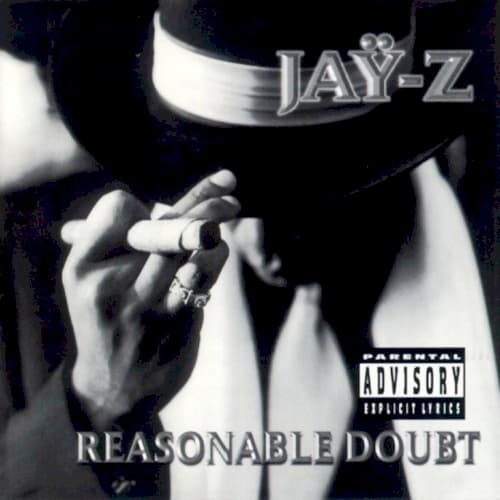
Before the mogul, the billionaire businessman, and the cultural icon stood a Brooklyn hustler with something to prove. Jay-Z arrived relatively late to the commercial rap game at twenty-six, but Reasonable Doubt demonstrates why the delay worked in his favor. This is the sound of a fully formed artist who spent years sharpening his craft on street corners and underground circuits before committing anything to wax. The 1996 debut on Roc-A-Fella Records captures that rare convergence of hunger and maturity—a veteran's technical command married to a newcomer's urgency.
The album exists in a specific economic and aesthetic zone. While East Coast rap was fracturing between the raw minimalism of Wu-Tang and the shiny suit era Puffy would usher in, Jay positioned himself as the sophisticated street narrator. Ski beats and DJ Premier loops provided the musical foundation, but the subject matter reached beyond corner narratives into existential reflection on the hustler's psychology. Every track grapples with the moral calculus of the drug trade—not from a distance, but from inside the contradiction. Jay-Z wasn't the first to explore these themes, but his technical execution and narrative complexity elevated the conversation.
Conversational Flow Meets Multisyllabic Precision
Jay-Z's technical approach on Reasonable Doubt centers on his signature conversational flow—a deceptively relaxed delivery that masks extraordinary rhythmic sophistication. He rarely shouts or strains for emphasis, instead using subtle inflection shifts and pocket manipulation to create dramatic tension. On Dead Presidents II, he glides across Ski's looped Lonnie Liston Smith sample with compound rhyme schemes that feel effortless: "I'm out for presidents to represent me / Get money, I got rhymes aplenty." The internal rhyme structure threads through entire verses without calling attention to itself, a technical feat that separates competent rappers from master craftsmen.
The vocabulary range demonstrates literary ambition without academic pretension. Jay peprolls out references to Cristal, Lexus coupes, and Moët alongside more contemplative language about fate, regret, and moral compromise. D'evils exemplifies this duality—DJ Premier's haunting piano loop supports verses that quote the Bible while detailing street economics. The hook's repetition of "Dear God, I wonder can you save me" isn't ironic posturing but genuine philosophical questioning embedded in technical verse construction. Jay uses extended metaphors across entire verses, building complex narratives that require active listening to fully appreciate.
Vocal delivery choices serve the material with surgical precision. On Can't Knock the Hustle, his tone carries weathered confidence, each line delivered with the authority of lived experience. The ad-libs remain minimal—this isn't the exuberant ad-lib era of Southern rap, but the more restrained East Coast tradition where every sound matters. When Jay does punctuate lines with emphasis, it lands with purpose. The breathing technique allows him to ride beats without gasping mid-phrase, maintaining the smooth conversational quality even during dense multisyllabic runs.
The production choices throughout deserve equal analysis. Ski handles most beats, crafting soul-sample-based soundscapes that avoid both the sparse minimalism of mid-90s underground rap and the glossy commercialism emerging elsewhere. Can I Live features an orchestral Issac Hayes loop that swells cinematically while Jay constructs an extended metaphor comparing rap careers to cocaine distribution. The beat provides space for his voice without overwhelming it—a crucial balance that amplifies the lyrical content rather than competing with it.
Rhyme scheme complexity escalates throughout the album. 22 Two's builds an entire track around couplets starting with the "too/two" sound, a technical exercise that could feel gimmicky but instead showcases Jay's ability to maintain narrative coherence within self-imposed structural constraints. Brooklyn's Finest pairs him with Notorious B.I.G. for a masterclass in contrasting flow styles—Biggie's choppier, more percussive delivery against Jay's smoother glide. The verse construction on both sides demonstrates how technical mastery can manifest through completely different approaches.
The album's song architecture avoids formulaic verse-chorus-verse patterns. Friend or Foe unfolds as a complete narrative without a traditional hook, sustained entirely by Jay's storytelling and the hypnotic beat. Coming of Age features Memphis Bleek's perspective alongside Jay's, creating dialogue structure that deepens the conceptual framework. These compositional choices reveal an artist thinking beyond radio single formatting, constructing tracks as complete artistic statements rather than commercial vehicles.
Career-Defining Moments Across Fifteen Tracks
Dead Presidents II stands as perhaps the most complete display of Jay-Z's technical arsenal. Over Ski's expertly flipped sample, he constructs verses with breathtaking rhyme density while maintaining perfect narrative clarity. The opening lines establish his philosophical framework—the acknowledgment that hustling funds the rap career, not vice versa. His flow switches pockets multiple times within single verses, accelerating and decelerating to emphasize key phrases. The multisyllabic rhyme runs in the second verse create intricate patterns without sacrificing conversational naturalness: "Geyser / Advice from the Roc keep your eye on every guy you / I'm wise to the game and the game is designed to..." The internal rhyme structure continues for bars without breaking stride.
D'evils captures the album's moral complexity in concentrated form. DJ Premier's production—all minor key piano stabs and crackling drums—provides the perfect sonic bed for Jay's existential wrestling. The technical achievement lies in how he balances street detail with philosophical depth across three verses that build thematic momentum. Each verse adds layers to the central tension between ambition and conscience. The rhyme schemes tighten as the track progresses, culminating in closing bars that acknowledge the trap without offering easy resolution.
Can I Live represents the album's cinematic peak. The eight-minute runtime allows Jay to construct his most elaborate extended metaphor, comparing the rap industry to drug distribution networks with sustained precision. The vocal performance here shows remarkable breath control—lengthy bars delivered without gasping or awkward pauses. His tone carries both confidence and caution, the sound of someone who understands exactly what he's risking. The orchestral swell of the Issac Hayes sample gives him room to modulate delivery, building toward the hook's release with careful dynamic control. This track alone demonstrates why Reasonable Doubt transcended typical debut album expectations—it sounds like the work of a veteran rather than a newcomer finding his voice.
East Coast Rap's Quiet Revolution
Reasonable Doubt earns its place among the essential 90s rap albums through sheer technical excellence and conceptual depth. Jay-Z arrived with his artistic vision fully formed, delivering an album that rewards both casual listening and deep technical analysis. The weakness, if one exists, lies in occasional thematic repetition—only so many angles exist on the hustler's dilemma, and by the album's final third, some observations feel familiar. A few tracks could have been trimmed without diminishing the overall impact.
Yet these minor critiques barely register against the album's towering strengths. The technical lyricism throughout remains impressive decades later, with rhyme schemes and flow patterns that influenced an entire generation of East Coast rappers. The production choices feel both timeless and distinctly mid-90s, capturing a specific aesthetic moment without sounding dated. Most importantly, the emotional honesty and moral complexity elevate this beyond typical debut efforts—Jay-Z wasn't trying to establish his voice, he was using an already established voice to explore difficult truths.
Reasonable Doubt didn't dominate charts immediately, but its influence compounded over time. This is the album that established Jay-Z as a serious artist rather than another street rapper with commercial ambitions. Every subsequent album in his catalog references back to the foundation built here—the conversational flow, the moral complexity, the technical precision disguised as effortlessness. For anyone studying East Coast lyricism or the evolution of 90s hip-hop, this album remains essential listening, a masterclass in how technical skill serves deeper artistic purpose.
Track Listing
Can't Knock the Hustle
The album opener establishes Jay's aesthetic immediately—smooth soul samples, conversational delivery, and hustler's manifesto lyrics. His flow rides the Fool's Paradise loop with relaxed confidence, using minimal inflection to maximum effect. Mary J. Blige's hook provides melodic counterpoint without overwhelming the verses. The rhyme schemes stay relatively straightforward here, serving as accessible entry point before the technical complexity deepens on later tracks. Jay's tone carries seasoned authority rather than youthful aggression.
Politics as Usual
Jay sharpens his focus over Ski's menacing production, delivering verses packed with political metaphors and street economics parallels. The flow tightens considerably from the opener, with more intricate internal rhyme patterns threading through extended bars. His breath control allows him to maintain momentum across lengthy compound sentences. The hook remains understated, keeping attention on the verse construction. This track demonstrates Jay's ability to elevate street narratives through sophisticated literary devices without losing authenticity.
Brooklyn's Finest
The Notorious B.I.G. collaboration showcases two contrasting technical approaches achieving equal impact. Biggie's choppier, more percussive delivery alternates with Jay's smoother glide across DJ Premier's stripped-down beat. Jay holds his own against arguably the era's most respected technical rapper, matching Biggie's wordplay density while maintaining his signature conversational tone. The competitive energy elevates both performances. This track captures East Coast rap's lyrical peak—two masters demonstrating different paths to technical excellence.
Dead Presidents II
Perhaps the album's most complete technical display. Jay constructs verses with extraordinary rhyme density while maintaining perfect narrative clarity. His flow switches pockets multiple times within verses, accelerating and decelerating for emphasis. The multisyllabic runs in the second verse create intricate patterns without sacrificing naturalness. Ski's Lonnie Liston Smith flip provides the perfect sonic foundation. The opening lines establish philosophical framework that carries through three increasingly complex verses. Vocal delivery balances confidence with underlying tension about the lifestyle being documented.
Feelin' It
Ski's Mellow Madness sample creates a laid-back sonic bed for Jay's most relaxed vocal performance. The flow here prioritizes pocket manipulation over rhyme complexity, riding the beat's groove with subtle syncopation. Mecca's hook adds melodic texture without disrupting the vibe. Jay's delivery carries almost conversational intimacy, as if speaking directly to the listener rather than performing for an audience. The rhyme schemes remain accessible while still demonstrating technical competence. This track provides crucial tonal variety within the album's broader conceptual framework.
D'evils
DJ Premier's haunting piano loop supports Jay's most philosophically complex verses. The technical achievement lies in balancing street detail with existential questioning across three verses that build thematic momentum. Rhyme schemes tighten as the track progresses, culminating in closing bars acknowledging the moral trap without offering resolution. The hook's biblical reference isn't ironic but genuine philosophical wrestling. Jay's tone carries weight here—this isn't braggadocio but confession. The vocal delivery remains controlled even while exploring darker psychological territory.
22 Two's
A technical exercise that could feel gimmicky but instead showcases masterful constraint. Building an entire track around couplets starting with the "too/two" sound requires maintaining narrative coherence within self-imposed structural limits. Jay succeeds completely, delivering verses that feel natural despite the restriction. The flow adapts to emphasize the recurring sound without becoming monotonous. This track demonstrates the difference between technical skill as empty acrobatics versus technique serving creative purpose. The beat's minimalism keeps focus on the wordplay.
Can I Live
The album's cinematic peak. Eight minutes allow Jay to construct his most elaborate extended metaphor, comparing rap industry to drug distribution with sustained precision. Remarkable breath control enables lengthy bars delivered without awkward pauses. The Issac Hayes sample's orchestral swell provides room for dynamic modulation, building toward the hook's release with careful control. Jay's tone balances confidence and caution throughout. The verse construction avoids formulaic patterns, sustaining narrative momentum across the extended runtime. This sounds like veteran work rather than debut album material.
Ain't No Nigga
The most commercially accessible track here, built around Foxy Brown's melodic hook and a lighter lyrical approach. Jay's flow stays conversational but adds more rhythmic bounce to match the beat's uptempo energy. The rhyme schemes remain technically competent without reaching the complexity of deeper album cuts. Foxy Brown's presence adds textural variety and expands the album's emotional range. While thematically lighter than surrounding tracks, the technical execution remains sharp. This track demonstrates Jay's ability to craft radio-friendly material without abandoning his core aesthetic.
Friend or Foe
Narrative storytelling without traditional hook structure, sustained entirely by Jay's technical command and the hypnotic beat. The conversational flow here serves the story's dramatic arc, with subtle inflection shifts marking dialogue transitions. Rhyme schemes stay relatively simple to prioritize narrative clarity over technical pyrotechnics. Jay's vocal delivery creates distinct character voices through minimal tonal adjustments. The track's five-minute runtime never drags because the story maintains momentum. This showcases how technical mastery enables artistic choices—the confidence to build an entire track without conventional song architecture.
Coming of Age
Memphis Bleek's appearance creates dialogue structure that deepens the conceptual framework. The back-and-forth verse trading allows Jay to explore different perspectives on the hustler's life cycle. His flow adapts to respond directly to Bleek's lines, creating genuine conversation rather than isolated verse performances. The production's melancholic tone underscores the thematic weight—this isn't celebration but sober reflection. Jay's technical superiority becomes evident through direct comparison, but Bleek's presence serves the album's broader narrative purpose. The track architecture avoids predictable patterns.
Cashmere Thoughts
The Dramatics flip provides lush sonic backdrop for Jay's most introspective verses. His flow here prioritizes emotional authenticity over technical flash, delivering lines with understated sincerity. The rhyme schemes remain competent without dominating the content. This track demonstrates Jay's range—the ability to dial back technical pyrotechnics when the material calls for different approach. His tone carries genuine weariness rather than performed emotion. The hook's simplicity allows verses to breathe. This represents necessary tonal shift within the album sequence, providing emotional counterpoint to harder-edged tracks.
Bring It On
Big Jaz's appearance and harder production push Jay toward more aggressive delivery than elsewhere on the album. His flow adapts to match the track's confrontational energy, adding more percussive emphasis to line endings. The rhyme schemes tighten during competitive sparring with Jaz. While not the album's strongest individual track, it demonstrates Jay's technical versatility—the ability to adjust delivery style based on context. The back-and-forth structure creates momentum through contrast. This showcases how great technical rappers modulate their approach rather than relying on single signature style.
Regrets
The album's emotional nadir. Jay delivers his most personally vulnerable verses over melancholic production, exploring consequences of the hustler lifestyle with unusual candor. His flow slows considerably here, prioritizing emotional weight over rhythmic complexity. The rhyme schemes stay relatively simple to ensure clarity of confession. Vocal delivery strips away much of the confidence heard elsewhere, revealing genuine uncertainty beneath the assured exterior. This track's placement near album's end provides crucial emotional context for everything preceding it—acknowledgment that the lifestyle being documented carries real human cost.
Can I Live II
Essentially an extended outro that reprises the original's thematic concerns with slightly different musical backdrop. Jay's flow here feels more reflective than the original version, as if revisiting earlier observations with accumulated perspective. The beat's variation provides textural change without abandoning the cinematic quality. While potentially redundant after the original Can I Live, this track serves as bookend that reinforces central themes. The vocal delivery carries finality, summarizing the album's philosophical tensions one last time before release. Rhyme complexity remains high throughout.
Can't Knock the Hustle (Fool's Paradise remix)
The remix provides alternate take on the album opener with production variations and slightly different vocal approach. Jay's flow remains largely identical to the original but feels more relaxed with additional studio time. The beat's adjustments create different emotional texture without fundamentally changing the track's identity. While not essential to the album's core narrative, the remix demonstrates Jay's attention to production detail and willingness to revisit material from different angles. This serves as final statement reinforcing the album's opening themes with accumulated weight of everything between.