The Sound That Redrew Hip-Hop's Geographic Lines
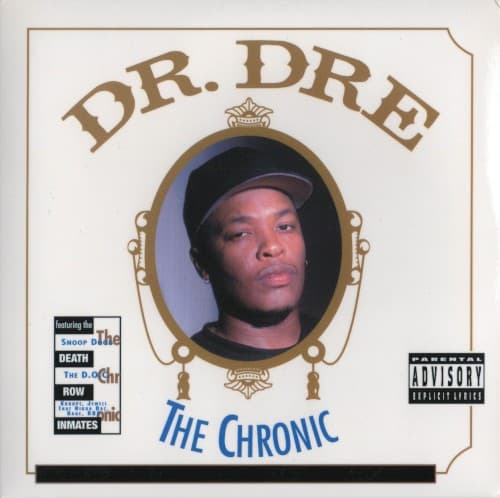
When Dr. Dre walked away from N.W.A and Ruthless Records in early 1992, the architecture of West Coast rap needed rebuilding from the foundation up. The resulting blueprint arrived in December of that year, not as a collection of singles but as a fully realized sonic universe. The Chronic didn't just introduce a new production aesthetic—it established a lifestyle, a mood, a California mythology that would dominate hip-hop for the next half-decade and fundamentally alter what rap music could sound like.
Released on Death Row Records, Dre's debut solo statement served multiple purposes simultaneously. It was a declaration of independence from his N.W.A past, a commercial bid for crossover success, and a carefully orchestrated introduction of emerging talent—most notably a young Long Beach rapper named Snoop Doggy Dogg, whose languid delivery would become inseparable from the album's identity. Where N.W.A's production felt claustrophobic and confrontational, The Chronic opened windows, letting in California sunlight filtered through layers of Parliament-Funkadelic samples, whining synthesizers, and bass frequencies that seemed to roll like low-riders down Crenshaw Boulevard.
The album arrived at a pivotal moment for West Coast rap, just months after the Los Angeles uprising following the Rodney King verdict. That context permeates several tracks, but Dre's primary achievement was transforming street narratives into something simultaneously harder and more accessible than what came before. The Chronic made gangsta rap feel cinematic rather than claustrophobic, expansive rather than insular, and in doing so, it shifted hip-hop's center of gravity westward in ways the industry is still processing three decades later.
G-Funk Architecture and the Reinvention of West Coast Sound
The production work across these sixteen tracks represents a complete reimagining of what West Coast rap could be. Dre stripped away the dense, sample-heavy approach that defined the Bomb Squad era and N.W.A's earlier work, replacing it with something deceptively simple: slow-rolling bass lines, high-pitched synthesizer leads, and sparse drum programming that left enormous space in the mix. This minimalism wasn't about limitation—it was about control, creating production so clean and deliberate that every element could breathe independently while contributing to a unified atmosphere.
The genius lies in how Dre synthesized seventies funk—particularly Parliament, Funkadelic, and Ohio Players—with live instrumentation and digital precision. Rather than chopping samples into unrecognizable fragments, he often let melodic hooks play out, building tracks around them organically. The result feels less constructed than inhabited, as though these songs existed fully formed in some alternate dimension where George Clinton and gangsta rap shared the same creative DNA. The synth work, often dismissed as dated by later critics, actually serves a specific purpose: those whining, oscillating tones create tension and release within the laid-back groove, preventing the music from becoming too relaxed or background-friendly.
Lyrically, the album operates on multiple levels simultaneously. Dre himself was never the most technically proficient rapper, but his verses project authority and directorial vision—he's the conductor orchestrating this ensemble rather than the soloist demanding center stage. That approach allowed space for his collaborators, particularly Snoop, whose conversational flow and dark humor transformed what could have been standard gangsta fare into something more nuanced and character-driven. When Snoop delivers lines with that characteristic drawl, he's not just rapping—he's inhabiting a persona that feels lived-in and three-dimensional.
The album's thematic content walks a difficult line between street authenticity and entertainment spectacle. Tracks dealing with violence, drug culture, and gang life are presented without the moral panic or journalistic distance that characterized some East Coast approaches to similar material. There's an acceptance here, a matter-of-fact presentation of South Central reality that doesn't apologize or sensationalize. Yet Dre also understood he was building a commercial product—the album's more playful moments and radio-friendly hooks reveal a producer thinking about crossover appeal without diluting the core identity.
What makes The Chronic historically significant beyond its immediate sonic innovations is how it established a template others would follow for years. The G-funk sound became West Coast rap's defining aesthetic throughout the mid-nineties, spawning countless imitators who grasped the surface elements—the synths, the slow tempos, the Snoop-influenced delivery—without understanding the production sophistication underneath. Dre's mixing and arrangement choices, his understanding of low-end frequencies and how to make bass feel physical rather than just audible, represented a quantum leap in rap production standards that pushed the entire genre forward technically.
The Tracks That Defined a Generation's Sound
Nuthin' but a G Thang stands as the album's commercial and artistic centerpiece, a track so perfectly constructed it feels inevitable rather than created. The synthesizer melody, lifted and transformed into something new, provides the scaffolding for Snoop's star-making performance and Dre's authoritative hook. What makes it exceptional is the space—the production breathes, allowing each element room to exist independently while never losing the groove that makes it irresistible. The track functions as both party anthem and mission statement, encapsulating everything The Chronic represents in four minutes.
Let Me Ride showcases Dre's sampling genius at its most elegant, building the entire track around Parliament's Mothership Connection in a way that feels like collaboration across time rather than theft. The production here is remarkably restrained—just bass, drums, that iconic synth line, and occasional flourishes that never crowd the mix. Dre's verses project a cruising, confident energy perfectly matched to the music, creating one of hip-hop's definitive riding tracks. The way the song moves, its unhurried tempo and hypnotic repetition, captures a specific California experience that resonated far beyond its geographic origins.
Fuck Wit Dre Day serves as both celebration and warning shot, Dre's declaration of independence wrapped in production that slaps harder than almost anything else in his catalog. The bass line hits with physical force while maintaining that signature G-funk melody, and the track's confrontational energy—aimed squarely at former N.W.A partner Eazy-E and producer Dr. Dre—never overwhelms the musicality. Snoop's verse here demonstrates why he became a star, delivering humor and menace in equal measure with a flow so relaxed it sounds effortless. The track proved Dre could match East Coast aggression while maintaining his distinctly West Coast sonic identity.
A Foundational Text in Hip-Hop's Ongoing Evolution
The Chronic's influence extends so far beyond its release date that hearing it fresh requires conscious effort to strip away three decades of imitators and descendants. This is the album that made West Coast rap commercially dominant, that introduced the world to Snoop Dogg, that established Dr. Dre as hip-hop's premier producer, and that created a sonic template countless artists would follow throughout the nineties and beyond. Its production innovations—the G-funk aesthetic, the emphasis on bass and space, the integration of live instrumentation with sample-based composition—raised industry standards and expanded the genre's sonic possibilities.
The album isn't without weaknesses. Some skits and interludes feel dated, and the album's treatment of women hasn't aged well, even accounting for era and genre conventions. A few tracks in the second half lose momentum, and the sixteen-track length occasionally feels indulgent when a tighter twelve-track sequence might have hit harder. Dre's own rapping, while authoritative, can't match the technical skill or personality of his collaborators, making him occasionally feel like a guest on his own album.
Yet these criticisms barely diminish what The Chronic achieved. This is essential listening for understanding how hip-hop evolved in the nineties, how regional sounds can reshape entire genres, and how production innovation drives the music forward as much as lyrical content. It's a rare album that sounds like both a definitive statement and a beginning, capturing a specific moment while simultaneously creating the future. For anyone exploring West Coast rap, G-funk's origins, or the development of modern hip-hop production techniques, The Chronic remains the mandatory starting point—a landmark that hasn't lost its power to surprise listeners with how fresh it still sounds.
Track Listing
The Chronic (Intro)
The opening seconds establish atmosphere before content, a wash of marijuana smoke and conversation that positions the listener inside Dre's world rather than observing from outside. It's brief but purposeful, setting the album's tone and thematic focus while introducing the soundscape that will dominate the next hour. The intro functions as a threshold, preparing listeners for the fully realized universe about to unfold. Production-wise, it demonstrates Dre's understanding that albums need breathing room and contextual grounding rather than immediate assault.
Fuck Wit Dre Day (And Everybody's Celebratin')
Dre's declaration of independence hits with remarkable force, both musically and lyrically. The bass line carries physical weight while the production maintains that signature bounce, creating space for some of the album's most aggressive content without sacrificing musicality. Snoop's appearance here is revelatory, his delivery so relaxed it contrasts beautifully with the track's confrontational purpose. The song works as both diss track and party anthem, proving Dre could channel anger into something people wanted to hear repeatedly rather than once for the drama.
Let Me Ride
Perhaps the album's most perfectly realized vision of G-funk as lifestyle music, this track builds its entire identity around that Parliament sample while never feeling derivative. Dre's verses project calm confidence, the perspective of someone who's already won rather than still fighting. The production breathes magnificently, every element given room to exist independently while contributing to the hypnotic whole. It's a showcase for Dre's arrangement skills, his understanding of when to add elements and when silence serves the groove better than additional instrumentation.
The Day the Niggaz Took Over
The album's most explicitly political moment addresses the Los Angeles uprising with raw immediacy, featuring Dre alongside Snoop and Daz Dillinger. The production feels darker than surrounding tracks, the bass heavier and more ominous, matching the content's gravity. What distinguishes this from standard political rap is the ground-level perspective—these aren't observations but reported experiences, delivered without distance or analysis. The track proves The Chronic could engage serious subject matter without abandoning its sonic identity or becoming preachy.
Nuthin' but a "G" Thang
The album's commercial peak and arguably its creative apex, this track represents everything G-funk could be at its most accessible and sophisticated. That synthesizer line has become so iconic it's easy to forget how unusual it sounded in 1992, how Dre transformed a recognizable sample into something that felt entirely new. Snoop's verse here launched a career, his delivery so distinctive and quotable it overshadowed Dre's solid but less memorable contribution. The production is masterfully restrained—just enough elements to maintain interest without cluttering the groove that makes it timeless.
Deeez Nuuuts
The album's most playful moment builds comedy around a phone prank concept that could have fallen flat but instead became a fan favorite. Dre's production keeps the energy high while Snoop and Daz trade verses that balance humor with technical skill. What saves this from being mere novelty is the musical foundation—the beat slaps hard enough to stand independent of the comedy, and the performances commit fully to the bit without winking at the audience. It provides necessary tonal variation within the album's flow.
Lil' Ghetto Boy
Snoop takes center stage for one of the album's more introspective moments, delivering narrative verses over production that feels more melancholy than celebratory. The track addresses struggle and survival without preaching or offering easy solutions, maintaining the album's street perspective while adding emotional depth. Dre's production here is notably darker, the bass more subdued and the melodic elements carrying minor-key sadness. It's a reminder that The Chronic could handle tonal variation without losing coherence, and that Snoop's skills extended beyond party tracks and humor.
A Nigga Witta Gun
D.O.C.'s appearance injects different energy into the album's second half, his more aggressive delivery contrasting with Snoop's laid-back dominance elsewhere. The production maintains G-funk elements while feeling harder and more urgent, the tempo slightly increased and the bass more prominent. It's a showcase for Dre's ability to adjust his production approach to different vocalists while maintaining the album's overall aesthetic. The track prevents the second half from feeling like an afterthought, proving Dre had depth beyond his most radio-friendly material.
Rat-Tat-Tat-Tat
The album's most uncompromising gangsta moment, this track embraces violence without apology or distance. Dre's production here is notably stripped-down, letting the bass and drums dominate while vocals sit prominently in the mix. It's one of the darker tracks sequentially, and its placement in the album's second half creates necessary contrast with the more playful earlier material. The absence of hooks or catchy elements suggests Dre was confident enough in his vision to include tracks purely for thematic balance rather than single potential.
The $20 Sack Pyramid
A brief interlude that showcases Dre's attention to album pacing and atmosphere-building. The skit format could have felt like filler but instead provides breathing room between heavier tracks while maintaining the album's thematic focus on marijuana culture. It's evidence of Dre thinking about The Chronic as a complete listening experience rather than a collection of potential singles. The production elements underneath the dialogue maintain sonic continuity, ensuring even transitional moments feel intentional rather than tacked-on.
Lyrical Gangbang
A posse cut featuring Kurupt and others, this track demonstrates the depth of Death Row's roster while giving Dre's collaborators space to shine. The production maintains G-funk elements while feeling slightly more aggressive, accommodating multiple voices and styles without losing coherence. It's one of the album's more technically impressive rap performances, with verses that prioritize wordplay and flow over narrative. The track proves The Chronic wasn't just about Dre and Snoop—the larger artistic collective had serious skills worth showcasing.
High Powered
Another showcase for the extended Death Row crew, this track features RBX delivering some of the album's most technically impressive verses. Dre's production here leans into darkness, the bass frequencies rumbling with physical presence while the melodic elements remain sparse. It's positioned well in the album's second half, preventing momentum loss while adding stylistic variation. The track demonstrates Dre's willingness to step back and let others command the spotlight, his confidence in his overall vision allowing space for diverse voices.
The Doctor's Office
A brief interlude that uses comedy to provide pacing relief while maintaining thematic connections to the album's marijuana-focused identity. The skit features patients waiting for Dre in a medical office setting, playing on his nickname while keeping the atmosphere light. It's strategically placed to prevent the album's latter half from feeling too dense or serious, showing sophisticated understanding of how listeners experience album-length projects. Even these short moments receive production attention, ensuring sonic continuity throughout.
Stranded on Death Row
One of the album's standout deep cuts, featuring Snoop, Kurupt, RBX, and Lady of Rage in a posse cut that crackles with energy. Dre's production here is among the album's most complex, layering elements without cluttering the mix while accommodating multiple vocal styles. Each performer brings distinct personality, and the track functions as both showcase for Death Row's roster depth and demonstration of Dre's ability to construct vehicles for diverse talents. It's criminally underappreciated, proving the album's quality extends well beyond its singles.
The Roach (The Chronic Outro)
A brief closing moment that brings the album full circle thematically, returning to the marijuana imagery established in the opening. It's purposefully understated, allowing the album to wind down rather than ending with bombast. The production elements maintain consistency with what came before while signaling conclusion, and the brevity prevents overstaying welcome. It demonstrates Dre's understanding of album architecture—knowing when to end is as important as knowing how to begin.
Bitches Ain't Shit
The album's most controversial closer, featuring Snoop, Kurupt, and Daz over production built around a memorable piano loop and heavy bass. The content hasn't aged well, reflecting attitudes toward women that were problematic even in 1992, yet the track remains musically compelling and historically significant for understanding nineties hip-hop's blind spots. Snoop's sung hook became infamous, and the verses showcase technical skill even as the subject matter deserves critique. It's a reminder that landmark albums can be essential and flawed simultaneously, worthy of study without requiring endorsement of every element.