From Compton to Cultural Architect: Dr. Dre's Rise as Hip-Hop's Definitive Producer
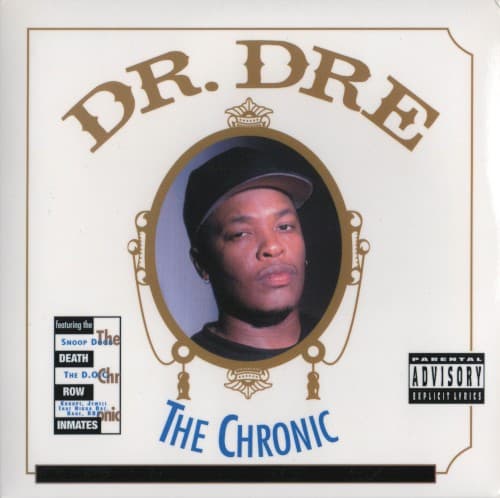
Andre Young transformed from a South Central Los Angeles DJ into the most consequential producer in hip-hop history, fundamentally altering how rap music sounds, sells, and scales. Dr. Dre emerged in the mid-1980s as part of the World Class Wreckin' Cru before co-founding N.W.A, the group that weaponized gangsta rap and made Compton a cultural coordinate recognized worldwide. His transition from group member to solo architect arrived with The Chronic in 1992, an album that didn't just launch Death Row Records but established an entirely new sonic vocabulary for West Coast rap.
What separates Dre from countless talented beatmakers is his ability to merge technical precision with commercial instinct. He hears hit records where others hear raw loops. He identifies generational talent before the industry catches on. From Snoop Dogg to Eminem to Kendrick Lamar, his artist development track record reads like a who's who of rap royalty. Beyond the boards, Dre redefined the producer's role in hip-hop — not as supporting cast but as primary creative force, brand architect, and business empire builder.
His influence extends past music into consumer electronics, corporate partnerships, and the fundamental economics of hip-hop. The Beats by Dre deal with Apple in 2014 represented the largest exit in music history, proving that a kid from Compton could outmaneuver Silicon Valley on their own turf. Dre's career arc traces hip-hop's own evolution from underground rebellion to dominant cultural force.
The G-Funk Blueprint: Dr. Dre's Revolutionary Production Aesthetic
Dre's sonic signature coalesced around what became known as G-funk — a Parliament-Funkadelic-sampling, synth-heavy approach that traded the harsh break-beat aggression of East Coast production for something slower, smoother, more hypnotic. The Chronic exemplified this aesthetic: whining synthesizers, deep bass lines that rattle trunk speakers, and live instrumentation layered into digital arrangements. Where his N.W.A work leaned into raw confrontation, his Death Row era introduced cinematic scope and melodic sophistication without sacrificing street credibility.
His mixing approach prioritizes clarity and space. Every element occupies its own frequency range, nothing bleeds into anything else, and the low end hits with physical force. Dre obsesses over drum sounds, sometimes spending days perfecting a snare tone or kick pattern. His beats don't sound dated because he focuses on timeless elements — groove, pocket, and the fundamental relationship between rhythm and melody. He understands that the best production doesn't call attention to itself but creates an environment where the rapper can dominate.
As his career progressed, Dre absorbed influences beyond funk. His work with Eminem incorporated rock elements and darker textures. His later productions for Kendrick Lamar and others showed willingness to embrace minimalism and modern trap influences while maintaining his signature polish. The constant across decades remains meticulous sound quality and an almost architectural sense of how to build a track that supports the artist while asserting its own identity. Listening to a Dre production means experiencing rap music at its most technically refined.
Building Empires: Dr. Dre's Journey from N.W.A to Aftermath and Beyond
Dre's professional trajectory began in the early 1980s Los Angeles club scene, DJing house parties and developing an ear for what moved crowds. His early production work with the World Class Wreckin' Cru established technical competency but little creative distinction. The formation of N.W.A in 1987 alongside Eazy-E, Ice Cube, MC Ren, and DJ Yella changed everything. Straight Outta Compton arrived in 1988 with production that matched the lyrical aggression — stark, confrontational, built to disturb comfortable listeners. Dre handled much of the sonic direction, crafting beats that felt like documentation of street warfare rather than entertainment.
The internal fractures within N.W.A pushed Dre toward independence. His departure and subsequent partnership with Suge Knight to form Death Row Records set the stage for his reinvention as solo artist and label architect. The Chronic dropped in December 1992 and immediately redefined West Coast rap's commercial and artistic potential. The album introduced Snoop Doggy Dogg, established G-funk as the dominant sound, and proved that a producer could carry a rap album as the primary creative voice. Singles like "Nuthin' but a 'G' Thang" and "Let Me Ride" dominated radio and MTV, bringing gangsta rap into mainstream American consciousness with unprecedented force.
Death Row's success brought complications — violence, legal troubles, and ultimately a business environment Dre found untenable. His 1996 exit and founding of Aftermath Entertainment marked another reinvention. The label's early years struggled commercially, but Dre's discovery and development of Eminem in 1998 changed the trajectory of both careers. The Slim Shady LP and subsequent Marshall Mathers LP established Eminem as rap's biggest star while positioning Dre as the industry's premier talent scout and developer. His work on Eminem's albums showcased versatility, trading G-funk smoothness for darker, more aggressive sonics that matched his protégé's psychological warfare style.
The 2000s saw Dre's creative output slow while his business acumen accelerated. He spent years working on the perpetually delayed Detox, ultimately scrapping the project. Instead, he focused on developing new talent — 50 Cent, The Game, Kendrick Lamar — and building Beats Electronics with Jimmy Iovine. The headphone company, launched in 2008, became ubiquitous in sports, entertainment, and youth culture. Apple's $3 billion acquisition in 2014 made Dre hip-hop's first billionaire and validated his understanding that brand equity and cultural influence translate into economic power beyond traditional music revenue streams.
His 2015 album Compton, released as a companion piece to the N.W.A biopic Straight Outta Compton, served as Dre's actual final statement as a solo artist. The album showcased modern production sensibilities while maintaining his signature attention to sonic detail, featuring appearances from Kendrick Lamar, Snoop Dogg, and a roster of contemporary artists. It felt less like a commercial play and more like a victory lap from someone with nothing left to prove.
The Dre Effect: How One Producer Shaped Multiple Generations of Hip-Hop
Dr. Dre's influence on hip-hop functions at multiple levels simultaneously. Sonically, he established G-funk as a permanent feature of West Coast rap's DNA and set production quality standards that forced the entire industry to upgrade. Every producer who obsesses over kick drum tuning or studies mix clarity owes something to Dre's example. His aesthetic choices — the preference for live instrumentation over pure sampling, the emphasis on melody within hard-edged beats, the cinematic scope of his arrangements — became foundational principles for countless beatmakers who followed.
As talent developer and architect, his record might be unmatched. Snoop Dogg, Eminem, 50 Cent, The Game, and Kendrick Lamar all emerged under Dre's guidance, each becoming generational stars who reshaped hip-hop's boundaries. He doesn't just discover talent; he understands how to position artists, develop their sound, and craft debut albums that establish immediate cultural dominance. His ear for matching artist to production remains virtually infallible. That network of artists represents a family tree that branches across regions, styles, and eras, all connected through Dre's creative vision.
Beyond music, Dre's business model demonstrated new possibilities for hip-hop entrepreneurs. The Beats deal proved that artists could build billion-dollar companies by leveraging cultural influence into adjacent industries. His success opened doors for other hip-hop figures to pursue venture capital, tech partnerships, and equity stakes rather than just endorsement deals. Dre showed that ownership and long-term vision generate more wealth than any recording contract, fundamentally changing how ambitious artists approach their careers. His path from producer to mogul to tech entrepreneur created a blueprint that extends far beyond beats and rhymes into the fundamental economics of cultural capital.