From Brooklyn Streets to Hip-Hop Immortality: The Notorious B.I.G.'s Meteoric Rise
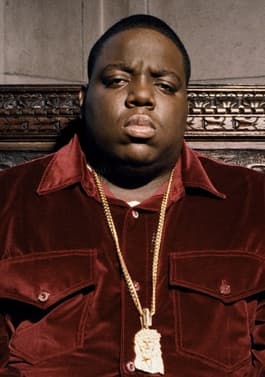
Christopher Wallace emerged from the Bed-Stuy section of Brooklyn in 1992 with a voice that sounded like it had absorbed decades of street wisdom in just twenty years of living. As The Notorious B.I.G.—also known as Biggie Smalls—he transformed East Coast hip-hop at a moment when the region's commercial dominance had slipped to the West. His demo tape landed in the hands of Sean "Puffy" Combs, then an A&R at Uptown Records, who recognized something unprecedented: a 6'3", 300-pound storyteller with the technical precision of Rakim, the narrative instincts of Slick Rick, and the menace of Kool G Rap, all wrapped in a delivery so effortless it sounded conversational.
Biggie's career spanned just three years of recorded output before his murder in Los Angeles on March 9, 1997, yet his influence rivals artists with decades-long discographies. His debut album established a new template for street rap that balanced cinematic detail with commercial accessibility. Where many gangsta rappers relied on shock value and aggressive posturing, Biggie brought psychological depth and dark humor to tales of crack dealing, robbery, and survival. He made violence sound contemplative rather than celebratory.
What separated Wallace from his contemporaries was his ability to code-switch between personas—the remorseful hustler on "Everyday Struggle," the hedonistic player on "Big Poppa," the cold-blooded criminal on "Gimme the Loot"—without losing authenticity. He understood that street life contained multitudes, and his music reflected that complexity. His death at 24 robbed hip-hop of an artist still ascending, leaving behind a concentrated body of work that continues to define East Coast rap excellence.
Cinematic Storytelling Meets Effortless Flow: Biggie's Sonic Signature
The Notorious B.I.G.'s technical mastery resided in what appeared to be total ease. His flow moved with conversational naturalism, riding beats without obvious effort, yet his internal rhyme schemes and multi-syllabic patterns revealed meticulous construction beneath the surface. He could accelerate into rapid-fire triplets or slow to a menacing crawl, adjusting his cadence to match the emotional temperature of each verse. On tracks like "Warning" from Ready to Die, he builds narrative tension through pacing alone, his voice dropping to a near-whisper as he describes preparing for home invaders.
Biggie's vocal tone carried inherent authority—a deep baritone that could sound both threatening and charming, sometimes within the same bar. He deployed dark humor as a survival mechanism, undercutting the grimness of his subject matter with unexpected punchlines. This tonal balance made even his most violent narratives feel human rather than cartoonish. When he rapped about robbing pregnant women on "Gimme the Loot," the moral horror was acknowledged within the song's internal dialogue, creating psychological complexity rare in mid-90s gangsta rap.
Production-wise, Biggie thrived across multiple sonic palettes. His primary architect was Sean Combs, whose Bad Boy approach favored sample-heavy production built around recognizable soul and R&B loops. Tracks like "Juicy" flipped Mtume's "Juicy Fruit" into an aspirational anthem, while "Big Poppa" rode The Isley Brothers into smooth-player territory. But Biggie sounded equally commanding over DJ Premier's stripped-down boom-bap on "Unbelievable" and the eerie minimalism of Easy Mo Bee's "Gimme the Loot." His adaptability demonstrated an MC secure enough in his identity to inhabit any sonic environment without compromise.
Three Years That Redefined East Coast Rap: Biggie's Complete Career Arc
Christopher Wallace's entry into professional rap came through street-level hustling of a different kind. After serving nine months in North Carolina on a weapons charge, he returned to Brooklyn in 1991 and began making demo tapes that circulated through the underground. One tape reached DJ Mister Cee, who had worked with Big Daddy Kane, and subsequently found its way to The Source magazine's "Unsigned Hype" column in March 1992. That feature—highlighting an unknown MC named Biggie Smalls—caught the attention of Combs, then building his roster at Uptown.
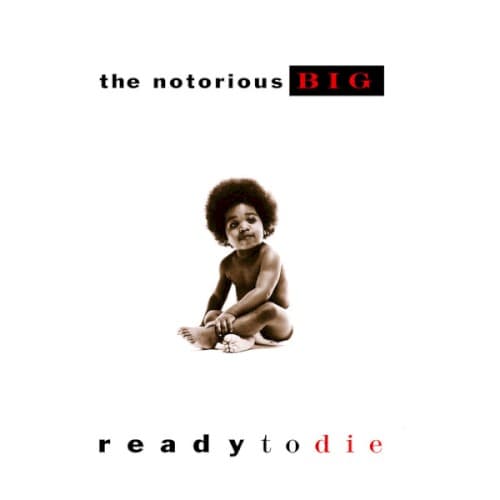
The transition from demo rapper to signed artist happened swiftly. Combs left Uptown to launch Bad Boy Entertainment in 1993, bringing Wallace with him. The label secured distribution through Arista Records, positioning Biggie as the flagship artist for Combs's new empire. Early singles like "Party and Bullshit" from the Who's the Man? soundtrack introduced Biggie's voice to a wider audience, but nothing prepared hip-hop for the arrival of Ready to Die in September 1994. The album opened with a conceptual framework—birth to death—that gave structure to Biggie's street narratives. "Things Done Changed" established the album's nostalgic melancholy, mourning a Brooklyn childhood destroyed by the crack epidemic. "Gimme the Loot" showcased pure technical savagery, with Biggie voicing two different stick-up kids plotting robberies. "Juicy" became the crossover hit, a rags-to-riches anthem that made Biggie a household name beyond hip-hop circles.
Ready to Die's commercial success—eventually certified six-times platinum—coincided with rising tensions between East and West Coast rap scenes. Biggie's friendship with Tupac Shakur deteriorated after Shakur was shot and robbed at Quad Recording Studios in Manhattan in November 1994. Tupac suspected Biggie and Combs had prior knowledge of the attack, an accusation both denied. The friendship collapsed, and what had been a personal conflict metastasized into a bicoastal industry feud as media outlets amplified the narrative. Biggie largely avoided direct confrontation, though tracks like "Who Shot Ya?"—recorded before Tupac's shooting but released after—were interpreted as disses despite Biggie's insistence otherwise.
Between 1995 and 1996, Biggie focused on building Bad Boy's roster, appearing on hits by 112, Total, and his protégé group Junior M.A.F.I.A., which included his close friend Lil' Kim. His verse on Junior M.A.F.I.A.'s "Get Money" showcased the more materialistic, luxury-focused persona he had begun cultivating. Work on his second album accelerated through 1996, with Biggie recording in both New York and Los Angeles. The double album—originally titled Life After Death…'Til Death Do Us Part—expanded his sonic palette beyond Bad Boy's house sound, incorporating collaborations with producers like RZA, DJ Premier, and Havoc of Mobb Deep alongside Combs's hitmaking machinery.
Shakur's murder in Las Vegas on September 13, 1996, intensified scrutiny on the East-West conflict. Biggie's second album, retitled simply Life After Death, was scheduled for March 1997 release. He traveled to Los Angeles in February 1997 to promote the album and attend the Soul Train Music Awards. On March 9, after leaving a party hosted by Vibe magazine, Biggie's GMC Suburban was stopped at a red light on Wilshire Boulevard when a Chevrolet Impala pulled alongside and an unknown assailant fired multiple shots. Biggie was struck four times and pronounced dead at Cedars-Sinai Medical Center at 1:15 AM. He was 24 years old.
Life After Death was released sixteen days later, debuting at number one and eventually certified Diamond. The album showcased an artist expanding his range—the apocalyptic "Notorious Thugs" with Bone Thugs-n-Harmony demonstrated rapid-fire technical ability, while "Sky's the Limit" offered aspirational storytelling aimed at younger listeners. "Hypnotize" and "Mo Money Mo Problems" became posthumous number-one hits, their music videos showing a Biggie who looked healthier and more confident than ever. The tragic irony of an album titled Life After Death releasing after its creator's murder was not lost on anyone. His murder remains officially unsolved, contributing to the mythology that surrounds his legacy.
The Blueprint for Modern Storytelling: Biggie's Enduring Influence on Hip-Hop
The Notorious B.I.G.'s death at the creative peak of his powers created a legacy frozen in potential. Unlike artists who decline or overstay their relevance, Biggie left behind only two studio albums—both classics—with no weak material to complicate his mythology. This brevity concentrates his influence. Nearly every technical advancement in East Coast rap since 1997 can trace lineage back to his approach: the conversational flow, the multi-syllabic rhyme schemes buried in casual delivery, the balance between street credibility and commercial appeal, the cinematic detail in first-person narratives.
His influence spans stylistic boundaries. Jay-Z absorbed Biggie's effortless charisma and player persona, transforming it into a blueprint for commercial dominance. Nas's storytelling grew more cinematic after Ready to Die demonstrated how much narrative depth a single track could contain. Even Southern artists like T.I. and Young Jeezy incorporated Biggie's hustler philosophy into their regional contexts. When Kendrick Lamar constructs elaborate conceptual narratives across album-length arcs, he builds on foundations Biggie established with Ready to Die's birth-to-death structure. The DNA is everywhere.
Beyond technique, Biggie represented a specific cultural moment—the resurgence of New York hip-hop's commercial and artistic dominance after years of West Coast supremacy. Bad Boy's success proved that East Coast rap could compete in the pop marketplace without compromising its street foundation. The label's shiny-suit era drew criticism from purists, but Biggie himself maintained credibility across both camps. He could appear on crossover hits and underground posse cuts with equal authenticity, a versatility that modern artists still struggle to achieve. His murder, and the still-unsolved nature of the crime, ensures that discussions of his music remain entangled with tragedy, adding weight to every bar he recorded.