The Queensbridge Poet Who Redefined Lyrical Complexity
Nasir Jones emerged from Queensbridge's public housing towers in 1994 with a debut so cinematically detailed and technically refined that it immediately reset expectations for what rap could accomplish as literature. Where other artists built careers on charisma or street narratives, Nas constructed elaborate verbal architecture—stacking internal rhymes, historical references, and sensory imagery into verses that demanded repeated listening. His voice carried a peculiar mix of world-weariness and youthful hunger, a nineteen-year-old speaking with the gravity of someone who'd already lived several lives. The son of jazz musician Olu Dara, Nas absorbed melodic sensibility and improvisational thinking that would distinguish his approach from peers who prioritized aggression or swagger. That fusion of jazz-influenced phrasing and street reportage became his signature, establishing him as the measuring stick against which technical rappers would be judged for decades. His career has stretched across five decades now, weathering commercial pressure, critical backlash, competitive feuds, and generational shifts while maintaining relevance through constant reinvention. From the stripped-down boom bap that made him a legend to the lush, sample-rich productions of his recent renaissance, Nas has consistently prioritized craftsmanship over trend-chasing.
Jazz-Inflected Storytelling and the Architecture of Internal Rhyme
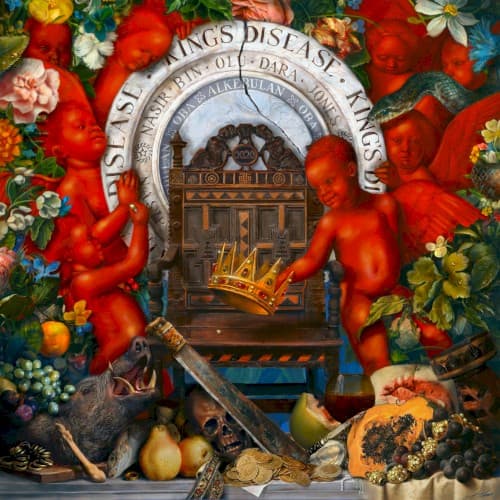
Nas's sonic identity centers on the tension between sparse, jazz-sampling production and dense, multi-layered lyricism. His flow operates like a jazz musician's phrasing—sometimes running ahead of the beat, sometimes lagging behind it, creating rhythmic pockets that give his verses a conversational intimacy despite their complexity. He favors producers who understand negative space, who allow his voice to occupy the foreground without cluttering the instrumental backdrop. DJ Premier, Large Professor, and Pete Rock shaped his early sound with dusty loops and hard-hitting drums that complemented rather than competed with his narratives. His vocal tone sits in a mid-range that avoids both the booming bass of West Coast artists and the nasal aggression of some East Coast contemporaries, instead projecting a reflective quality that makes even violent imagery feel contemplative. The technical hallmark of his style is the internal rhyme scheme—words connecting within lines rather than just at the ends, creating a cascading effect where meaning builds through sonic association. This approach demands active listening; his verses reward attention to detail, revealing new connections on the tenth listen that weren't apparent on the first. Across his discography, production aesthetics have shifted significantly. The stark, sample-based minimalism of his classic period gave way to more polished, occasionally overproduced mid-career work that drew criticism from purists. His recent collaboration with Hit-Boy beginning with King's Disease in 2020 found a middle ground—soulful, textured production that references the golden era without replicating it, providing a mature sonic bed for an artist now reflecting on legacy rather than proving technical superiority. His delivery has slowed over time, gaining authority while losing some of the breathless urgency that characterized his earliest work, a natural evolution that mirrors his thematic shift from street observer to elder statesman.
From Illmatic's Perfect Debut to Four Decades of Creative Reinvention
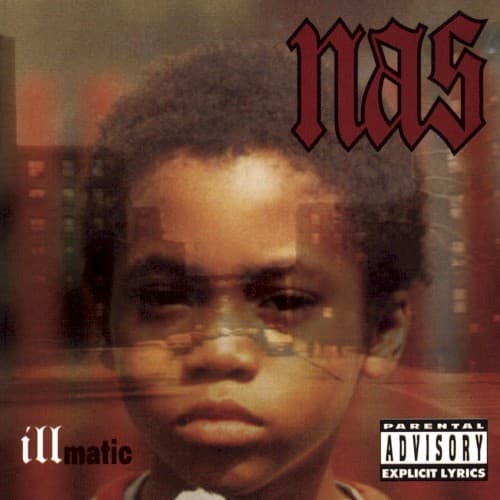
Nas's career trajectory defies the typical arc of debut perfection followed by decline. Illmatic arrived in 1994 as a fully realized artistic statement, a rare case where hype was justified and exceeded. Produced by an all-star roster including DJ Premier, Pete Rock, Q-Tip, and L.E.S., the album distilled the Queensbridge experience into nine tracks of such concentrated brilliance that it immediately claimed canonical status. Every production choice reinforced the lyrical content—the melancholic piano on 'Life's a Bitch,' the ominous bass on 'N.Y. State of Mind,' the stuttering drums on 'The World Is Yours'—creating an atmosphere of urban claustrophobia and fleeting hope. The album's commercial performance was modest compared to its cultural impact; it took years to go platinum, but its influence was immediate and irreversible. It established Nas as the technical standard-bearer of East Coast rap and created an impossible expectation for his follow-up. The pressure to replicate perfection shaped his subsequent decade. It Was Written in 1996 represented a conscious move toward commercial accessibility, incorporating glossier production and radio-friendly hooks that alienated some fans while expanding his audience. The album spawned his biggest hit 'If I Ruled the World' and went multi-platinum, but sparked debates about artistic integrity versus commercial success that would follow him throughout his career. I Am... in 1999 and Nastradamus later that year saw him struggling to balance competing impulses—street credibility, mainstream acceptance, conceptual ambition, and label pressure—resulting in uneven projects that contained brilliant moments buried in filler. His rivalry with Jay-Z from 2001 to 2005 became a defining narrative, producing vicious diss tracks that showcased his competitive fire but also distracted from his album work. Stillmatic in 2001 was framed as a return to form, addressing the Jay-Z battle directly while reconnecting with the raw energy of his debut. God's Son in 2002 introduced more personal, introspective material following his mother's death, revealing emotional depth that balanced his technical reputation. The mid-2000s brought inconsistency—Street's Disciple was bloated, Hip Hop Is Dead sparked controversy with its title premise, and the unreleased conceptual album tied to his 'Escobar' persona became hip-hop legend. His subsequent work with producers like Kanye West, No I.D., and Swizz Beatz showed willingness to experiment with contemporary sounds, though results varied. The partnership with Hit-Boy beginning in 2020 triggered an unexpected creative renaissance. King's Disease arrived when Nas was forty-seven, an age when most rappers have either retired or become caricatures of their former selves. Instead, the album sounded revitalized—focused, confident, thematically coherent, with production that honored his legacy while sounding contemporary. The chemistry between artist and producer resulted in three King's Disease albums in rapid succession, each maintaining quality control that had eluded some of his 2000s work. This late-career resurgence proved that his gifts hadn't diminished, only required the right collaborator to frame them effectively.
The Measuring Stick: Nas's Enduring Influence on Technical Lyricism
Nas's legacy rests on two foundations: the untouchable perfection of Illmatic and the example he set for prioritizing craft over decades. Illmatic functions as hip-hop's Citizen Kane—a debut so accomplished that it's simultaneously celebrated and resented, a standard that intimidates as much as it inspires. Every lyrical rapper who emerged after 1994 was measured against it, creating a lineage of technical MCs—from early 2000s underground artists to contemporary names like Joey Bada$$ and Earl Sweatshirt—who cite Nas as the prototype for intricate, literary hip-hop. His influence extends beyond technique to thematic territory. He made introspection and social consciousness commercially viable without sacrificing street credibility, proving that intelligent content and authentic representation weren't mutually exclusive. The specific Queensbridge perspective he documented—project life rendered with novelistic detail—became a template for regional storytelling across hip-hop. His willingness to address political themes, historical context, and philosophical questions within street narratives expanded rap's subject matter, giving permission for subsequent artists to incorporate complexity into their work. The longevity of his career also established a model for artistic aging in hip-hop. While many golden-era peers either retired or became nostalgic acts, Nas continued releasing relevant work into his fifth decade, proving that maturity could enhance rather than diminish an artist's perspective. His recent output with Hit-Boy demonstrated that veteran artists could sound contemporary without chasing trends or embarrassing themselves trying to recapture youth. The King's Disease series found commercial and critical success by leaning into his age, addressing legacy, mortality, and retrospective wisdom—subjects that resonated with his original audience who had also aged. His cultural impact transcends music into broader discussions of artistry, competition, and authenticity. The debates his career sparked—about sophomore slumps, commercial versus artistic success, the pressure of expectations—remain relevant to understanding how hip-hop values and judges its artists. For better or worse, Nas established that a perfect debut could define and haunt a career simultaneously, that technical brilliance alone doesn't guarantee commercial dominance, and that persistence and evolution can ultimately matter as much as initial genius.