The Explosive Partnership That Redefined Political Hip-Hop
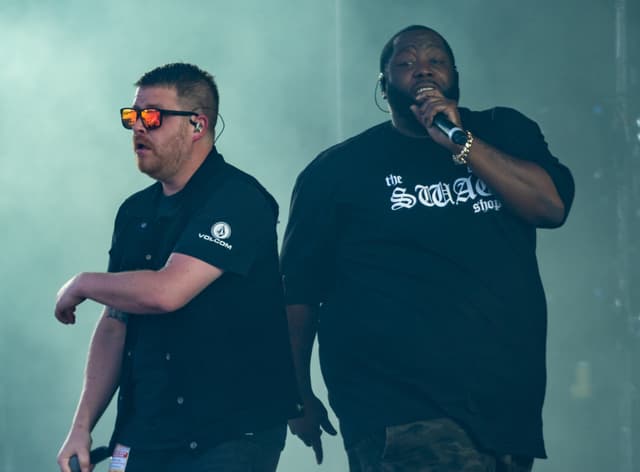
When El-P and Killer Mike joined forces in 2013, they weren't trying to recreate anything that had come before. The New York producer and Atlanta rapper had each spent over a decade building respected solo careers, but their collaboration as Run the Jewels unleashed something neither could have achieved alone — a sonic assault that felt like hip-hop's answer to punk rock's rawness and urgency. Their self-titled debut arrived with zero major label backing, distributed free online, yet it immediately commanded attention for its refusal to compromise on either political content or sonic aggression.
The duo emerged during a period when mainstream hip-hop was increasingly dominated by melodic trap and cloud rap aesthetics. Run the Jewels moved in the opposite direction, building their sound around distorted synthesizers, claustrophobic drum programming, and verses delivered with the intensity of artists who had nothing left to lose. El-P's production — honed through years of experimental work with Company Flow and his Definitive Jux label — provided the perfect backdrop for Killer Mike's booming delivery and politically charged content. Together they created music that felt both futuristic and rooted in hip-hop's confrontational tradition, drawing comparisons to Public Enemy's sonic density while carving out entirely new sonic territory.
What made Run the Jewels culturally significant wasn't just the music itself, but their entire approach to the industry. Releasing albums for free, touring relentlessly, and building a devoted fanbase without traditional industry infrastructure, they proved that established artists could sidestep conventional pathways and still reach audiences hungry for uncompromising hip-hop. Their success opened doors for other veterans seeking creative freedom outside major label systems.
Dystopian Sonics and Matched Aggression
El-P's production for Run the Jewels represents some of the most claustrophobic, dense beat-making in contemporary hip-hop. His approach layers distorted synthesizers, industrial percussion, and sci-fi sound effects into walls of noise that somehow remain headnod-friendly despite their abrasive textures. Tracks hit hard immediately — the opening seconds of songs like "Close Your Eyes (And Count to Fuck)" establish an almost overwhelming sonic presence before either MC utters a word. This maximalist production philosophy stands in stark contrast to the minimalist trends that dominated much of 2010s hip-hop, creating space for the duo's aggressive lyrical content without overwhelming it.
The vocal chemistry between El-P and Killer Mike drives every track. Mike's delivery carries the weight and authority of Southern rap tradition — his voice booms with the physical presence that made Atlanta rap so influential, but he applies that power to more complex lyrical structures than typical trap fare. El-P counters with a nasal, almost sardonic flow that feels perpetually on edge, his verses twisting through internal rhyme schemes and surreal imagery. When they trade bars, the contrast creates tension — Mike's straightforward aggression against El-P's paranoid complexity. Neither rapper attempts to match the other's style; the power comes from their differences colliding within the same sonic space.
Rhythmically, Run the Jewels tracks resist easy categorization. El-P's drum programming often avoids conventional boom-bap patterns, instead building around syncopated kicks and off-kilter hi-hat patterns that create lurching, uncomfortable grooves. This rhythmic unpredictability keeps listeners slightly off-balance, matching the lyrical content's refusal to provide easy answers or comfortable narratives. The production occasionally incorporates elements from hardcore punk and electronic music — distortion levels that would feel at home on a noise record, synthesizer tones borrowed from industrial music — but always maintains enough low-end punch and rhythmic drive to function as hip-hop. This fusion makes their music accessible to audiences beyond traditional hip-hop heads, drawing in fans of heavy music across genres.
From Underground Veterans to Independent Powerhouse
Both members brought substantial careers to Run the Jewels. El-P had established himself through Company Flow's underground classic "Funcrusher Plus" in 1997, then built Definitive Jux into one of independent hip-hop's most respected labels during the 2000s. His solo albums "Fantastic Damage" and "I'll Sleep When You're Dead" earned critical acclaim but never broke through commercially. Killer Mike, meanwhile, had appeared on OutKast's "The Whole World" in 2001, leading to a deal with Columbia Records and albums "Monster" and "I Pledge Allegiance to the Grind" that showcased his skills but failed to achieve mainstream success. By 2012, both artists were critically respected but commercially frustrated, their careers seemingly plateaued.
Their partnership began with Mike's appearance on El-P's 2012 solo album "Cancer 4 Cure," followed by El-P producing Mike's entire "R.A.P. Music" album that same year. The creative chemistry was immediately apparent — El-P's dystopian production elevated Mike's political content, while Mike's commanding presence gave El-P's beats the raw power they'd always needed. When they decided to record as a duo, they approached it with zero expectations. The self-titled "Run the Jewels" dropped in June 2013 as a free download, with physical copies sold through their own channels. Critics praised its uncompromising intensity, but more importantly, it connected with listeners tired of hip-hop's increasing commercialization.
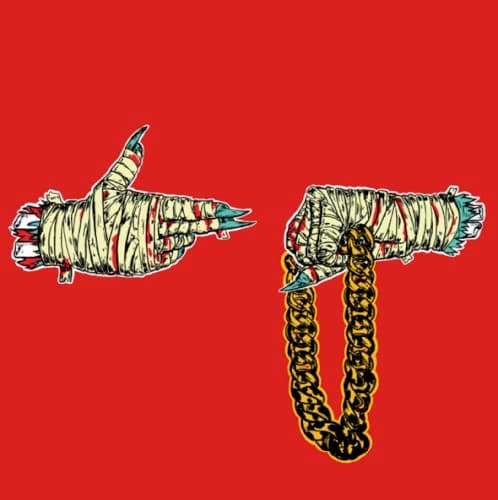
"Run the Jewels 2" arrived in October 2014, again released for free, and cemented the duo's status as one of hip-hop's most vital acts. The album expanded on their debut's template — denser production, more confident flows, and features from Zack de la Rocha and Gangsta Boo that felt perfectly integrated rather than forced. Tracks like "Close Your Eyes (And Count to Fuck)" and "Blockbuster Night Part 1" demonstrated growing sophistication in their songwriting while maintaining the raw energy that defined their debut. The album earned widespread critical acclaim, with our site rating it 9/10 for its relentless energy and uncompromising vision. More significantly, it proved their debut wasn't a fluke — Run the Jewels had established a repeatable creative process that delivered consistently excellent results.
The duo's subsequent albums maintained this momentum. "Run the Jewels 3" (2016) arrived early as a gift to fans, showcasing more experimental production choices and featuring Danny Brown and Trina. "RTJ4" (2020) dropped two days ahead of schedule in response to protests following George Floyd's murder, with tracks like "JU$T" and "walking in the snow" directly addressing police violence and systemic racism. The album felt urgent and necessary, its release timing transforming it from another excellent RTJ project into a cultural moment. Throughout their career, they've maintained creative control, distributed music on their own terms, and built a business model that allows them to tour extensively while keeping profits rather than enriching label executives.
Beyond their own releases, both members have remained active in other projects. Mike's solo work has continued, including the critically acclaimed "Michael" in 2023. El-P has produced for other artists and pursued various collaborations. Their ability to maintain Run the Jewels while continuing individual careers speaks to the partnership's strength — it enhances rather than constrains their creative output. They've also expanded into other media, with their music featured in films, video games, and television shows, introducing their sound to audiences who might never seek out underground hip-hop.
Redefining Independence and Political Hip-Hop for a New Era
Run the Jewels' most significant contribution may be demonstrating that established artists can build sustainable careers outside traditional industry structures. By releasing albums for free initially, then monetizing through vinyl sales, merchandise, and touring, they created a blueprint for artist independence in the streaming era. Their success proved that giving music away doesn't devalue it — when the music is strong enough, fans will support artists directly. This approach influenced how many artists think about album releases, particularly those with existing fanbases who can bypass traditional promotional cycles.
Sonically, they've kept aggressive, politically charged hip-hop relevant during an era that often favors more melodic, introspective approaches. Their willingness to address police violence, economic inequality, and systemic racism head-on — without softening their message for mainstream palatability — has inspired younger artists to embrace confrontational content. The dystopian, industrial-tinged production aesthetic El-P pioneered with this project has influenced producers across hip-hop and electronic music, proving that dense, abrasive sonics can coexist with compelling rap performances. Artists seeking to create politically engaged music with sonic adventurousness often look to RTJ's catalog as a reference point.
Their partnership also represents something increasingly rare in hip-hop — a true collaboration between equals rather than a star and supporting cast. Neither artist dominates; both contribute essential elements that make the whole greater than its parts. This model of collaborative creativity, combined with their DIY distribution approach and uncompromising artistic vision, positions Run the Jewels as both a continuation of hip-hop's independent tradition and a template for its future. They've proven that artists in their forties can create vital, relevant work without chasing trends or compromising their principles, offering hope to veterans across the genre that creative peaks don't necessarily arrive early in careers.