When Atlanta's Finest Pushed Every Boundary
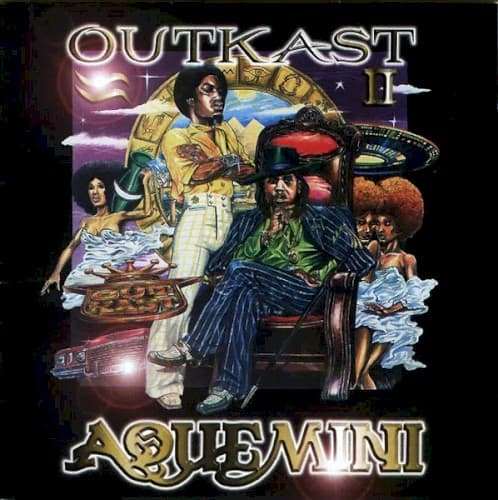
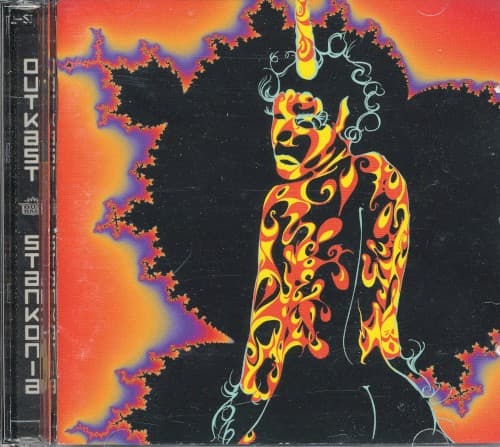
By the time OutKast entered Stankonia Studios in 1999, they had already proven themselves twice over. But Andre 3000 and Big Boi weren't interested in repeating formulas. What emerged in October 2000 was an album that sounds like nothing before or since — a sprawling, 24-track odyssey that marries Parliament-Funkadelic's cosmic soul with drum and bass ferocity, tender R&B vulnerability with punk rock abandon. Where ATLiens introduced psychedelic Southern futurism and Aquemini refined it, Stankonia tears down every remaining wall.
The album arrives at a cultural inflection point. Southern hip-hop was claiming its throne, production was growing more adventurous, and OutKast had earned the freedom to follow every creative impulse without commercial compromise. That freedom manifests in an album structure that defies convention — interludes that feel like connective tissue rather than filler, jarring transitions that make sense on repeated listens, and a willingness to let individual tracks exist in completely different sonic universes. This isn't an album you casually enjoy. It demands immersion.
What makes Stankonia extraordinary isn't just its sonic ambition, but how that ambition serves emotional truth. These 24 tracks chart real human experiences — relationship collapse, spiritual questioning, Southern pride, existential anxiety — through production that matches each emotional state with startling precision. The album feels massive yet intimate, chaotic yet intentional, aggressive yet vulnerable. It's the sound of two artists operating at the absolute peak of their creative powers, unafraid to fail spectacularly in pursuit of something unprecedented.
Sonic Architecture as Emotional Landscape
The production across Stankonia — handled primarily by Earthtone III, the collective identity for OutKast and longtime collaborator Mr. DJ — rejects the boom-bap orthodoxy still dominating much of hip-hop in 2000. Tracks like B.O.B. assault listeners with breakneck drum patterns that touch 155 BPM, gospel choir eruptions, and guitar riffs that could soundtrack a riot. The production doesn't sit comfortably in any genre box. It's simultaneously hip-hop, funk, rock, electronic, and something entirely new. That restlessness mirrors the album's thematic core: nothing stays still because nothing in life stays still.
But between those explosive moments, Stankonia reveals its capacity for tenderness. So Fresh, So Clean glides on synthesizer warmth and handclaps, creating space for the most effortlessly cool hook in OutKast's catalog. Ms. Jackson — the album's commercial anchor — builds its emotional weight through understated production: muted horns, a melancholy guitar loop, and enough breathing room for Andre and Big Boi to deliver genuinely apologetic verses about relationship fallout and co-parenting complications. The track works because the production never oversells the emotion. It trusts the words to carry the weight.
Andre 3000 and Big Boi have never sounded more distinct as lyricists, and that divergence strengthens rather than fractures the album. Andre leans into abstract imagery, spiritual questioning, and vocal experimentation — listen to how he shape-shifts across Red Velvet or pushes his voice into near-falsetto on Humble Mumble. He's chasing something beyond traditional rap prowess, interested in feeling over technique. Big Boi counters with grounded observations, sharper punchlines, and an earthiness that anchors even the most experimental tracks. His verses on Gasoline Dreams and Snappin' & Trappin' keep the album tethered to Southern reality while Andre floats into the cosmos.
The album's thematic throughline explores duality — not just between the two MCs, but within the Southern experience itself. Stankonia celebrates Atlanta's cultural ascendance while acknowledging the systemic issues that persist. Gasoline Dreams opens with sharp social commentary about media manipulation and false promises. Toilet Tisha tells a harrowing narrative about poverty, abuse, and survival with novelistic detail. These aren't throwaway storytelling exercises. They're OutKast using their platform to illuminate lives that mainstream hip-hop often ignores, wrapped in production so inventive that the messaging never feels preachy.
The interludes deserve specific mention because they function differently here than on most hip-hop albums. Rather than comedic skits or time-wasting filler, tracks like Kim & Cookie, Good Hair, and Cruisin' in the ATL create textural breaks that let the album breathe. They establish mood, offer conversational intimacy, and prevent listener fatigue across an ambitious runtime. Some might argue the album could lose three or four tracks without diminishing impact, but that would misunderstand Stankonia's purpose. The excess is the point. This is an album that refuses to edit itself, that insists you experience every impulse and detour.
What ultimately separates Stankonia from its peers is its fearlessness. In an era when even innovative artists hedged their bets with radio-friendly safety nets, OutKast built an album that could have alienated everyone — too experimental for mainstream audiences, too pop-adjacent for underground purists, too Black and Southern for rock critics still skeptical of hip-hop's artistic legitimacy. Instead, it bulldozed through every barrier, proving that commercial success and artistic integrity aren't mutually exclusive when the vision is strong enough and the execution is flawless.
The Tracks That Redefined Possibility
B.O.B. stands as perhaps the most electrifying four minutes in OutKast's entire discography. The title — which expands to Bombs Over Baghdad in live contexts, though the album presents it as an acronym without explanation — delivers exactly what it promises: explosive energy that feels like controlled chaos. The production layers live drums, synthesizers, and guitar into a wall of sound that demands physical response. Andre and Big Boi trade verses at breakneck pace, their flows adapting to the tempo without sacrificing clarity or meaning. It's a track that still sounds futuristic two decades later, a testament to production that was years ahead of its moment.
Ms. Jackson operates on opposite emotional terrain but proves equally essential. The track addresses Andre's real-life relationship dissolution with Erykah Badu and the complications of co-parenting with remarkable honesty. Rather than deflecting or posturing, both MCs deliver genuine apologies to the mothers of their children and, crucially, to their children's grandmothers. The specificity matters — acknowledging Ms. Jackson as a person with her own pain and perspective, not just an obstacle or stereotype. The chorus lodges itself in memory instantly, but the verses reveal new details on every listen. It's the kind of mature, emotionally intelligent songwriting that hip-hop rarely attempted in 2000, wrapped in production accessible enough to dominate radio without compromising its message.
Gasoline Dreams featuring Khujo Goodie sets the album's thematic agenda from track two, examining media saturation and the American Dream's broken promises over production that feels simultaneously anxious and hypnotic. The verses cut deep without resorting to heavy-handed messaging, trusting listeners to connect dots about systemic inequality and cultural commodification. Red Velvet showcases Andre at his most experimental, warping his voice and flow into new shapes while the production drifts through jazz-influenced passages. And Humble Mumble, featuring Erykah Badu, creates space for genuine vulnerability — Andre questioning his place in hip-hop while Badu's vocals wrap the uncertainty in warmth. These aren't just strong individual tracks. They're proof that Stankonia succeeds by refusing to choose between ambition and accessibility.
A Landmark That Expanded What Southern Hip-Hop Could Mean
Stankonia earns its reputation as one of hip-hop's essential albums not through perfection, but through fearless ambition realized at the highest level. Yes, the runtime challenges even devoted listeners. Yes, a few experiments land more interesting than enjoyable. But those minor critiques pale against what OutKast achieved: an album that sounds like nothing else in 2000 or now, that balances commercial appeal with artistic integrity, that proves Southern hip-hop could be as experimental and intellectually rigorous as anything from the coasts while maintaining its own distinct identity.
The album's influence ripples through two decades of subsequent hip-hop. You hear its fingerprints in Kanye West's maximalist production, in Kendrick Lamar's willingness to let albums sprawl and detour, in the genre-blurring approaches of Travis Scott and Tyler, The Creator. OutKast demonstrated that hip-hop albums could be sprawling artistic statements rather than collections of potential singles, that MCs didn't need to choose between accessibility and experimentation, that Southern artists could drive innovation rather than follow coastal trends.
More than anything, Stankonia captures two artists at the absolute peak of their creative powers, unafraid to follow every impulse and confident enough in their vision to invite listeners into uncharted territory. It's an album that rewards patience and attention, that reveals new layers on the tenth listen, that feels as vital and forward-thinking now as it did in 2000. In an era of carefully focus-grouped albums designed for algorithmic success, Stankonia stands as a reminder that the biggest risks often yield the richest rewards. This is what happens when talent, ambition, and creative freedom collide without compromise.
Track Listing
Intro
The opening sets an appropriately extraterrestrial tone, with distorted vocals and atmospheric production establishing that listeners are entering a different sonic dimension. It's brief but purposeful, creating immediate disorientation that prepares you for the genre-defying journey ahead. The production feels like transmission interference from another planet, which perfectly aligns with OutKast's interstellar Southern aesthetic.
Gasoline Dreams
Featuring Khujo Goodie, this track establishes Stankonia's thematic ambition immediately. The production balances menace with melody while the verses dissect media manipulation, false promises, and systemic inequality without resorting to preachy rhetoric. Big Boi and Andre trade observations about American contradictions with surgical precision. It's the kind of socially conscious hip-hop that trusts its audience to think rather than spelling out every critique.
I'm Cool (interlude)
A brief conversational break that establishes the album's loose, unstructured feel. Rather than forcing narrative cohesion, these interludes create breathing room and intimacy, like overhearing casual studio banter. It serves as a palate cleanser between more intense moments, maintaining the album's human scale despite its cosmic ambitions.
So Fresh, So Clean
One of Stankonia's most immediately accessible moments, riding a silky synthesizer groove and handclaps that create effortless cool. The verses celebrate style and confidence without arrogance, while the Sleepy Brown-assisted hook lodges in memory instantly. The production feels warm and inviting, proving OutKast could craft radio-ready singles without compromising their aesthetic vision. It's the sound of success worn lightly.
Ms. Jackson
The album's commercial and emotional centerpiece addresses Andre's real relationship fallout with remarkable honesty. Both MCs deliver genuine apologies to the mothers of their children and their children's grandmothers, acknowledging pain and complexity without deflection. The melancholy horn loop and understated production create space for genuinely vulnerable verses. It's mature, emotionally intelligent songwriting that hip-hop rarely attempted in 2000, wrapped in a chorus that dominated radio without feeling calculated.
Snappin' & Trappin'
Big Boi takes center stage over production that marries Southern bounce with electronic experimentation. The verses showcase his gift for grounded observation and sharp punchlines, keeping the album tethered to street-level reality even as production choices push into experimental territory. The beat knocks hard while leaving enough space for Big Boi's technical prowess to shine through clearly.
D.F. (interlude)
Another brief textural break that maintains the album's conversational intimacy. These interludes prevent listener fatigue across Stankonia's ambitious runtime, creating natural pauses that let the sequencing breathe. It's the kind of structural decision that separates thoughtful albums from mere track collections.
Spaghetti Junction
Named after Atlanta's notorious highway interchange, this track captures the city's constant motion and complexity. The production layers multiple elements into organized chaos while the verses navigate Atlanta's cultural landscape with pride and clear-eyed observation. It's OutKast claiming their city and sound with absolute confidence, refusing to apologize for Southern sensibilities or slow tempos.
Kim & Cookie (interlude)
A conversational interlude that adds human texture and humor without forced comedy. The casual intimacy of these moments creates the feeling of listening to an album made by real people rather than distant celebrities. It's a small structural choice that significantly impacts how the album feels across repeated listens.
I'll Call Before I Come
Featuring Gangsta Boo and Eco, this track explores relationship dynamics and sexual politics with more nuance than typical hip-hop posturing. The production creates a late-night atmosphere while the verses navigate desire and respect without reducing either to cliche. The guest features add different perspectives without disrupting the album's flow.
B.O.B.
The album's undeniable peak and perhaps OutKast's greatest single achievement. The production assaults listeners with 155 BPM breakbeats, gospel choirs, and guitar riffs that could soundtrack a revolution. Andre and Big Boi trade verses at breakneck pace without sacrificing lyrical clarity or meaning. It's controlled chaos that sounds as futuristic now as it did in 2000, proof that OutKast operated years ahead of their moment. The energy is physically overwhelming in the best possible way.
Xplosion
Featuring B-Real, this track shifts into more experimental territory with production that feels simultaneously spacious and claustrophobic. The guest verse adds West Coast perspective without disrupting Stankonia's aesthetic. The production creates an uneasy atmosphere that matches lyrics exploring desire and uncertainty, demonstrating OutKast's range beyond straightforward bangers or smooth grooves.
Good Hair (interlude)
A brief moment addressing beauty standards and identity politics through casual conversation. Rather than forcing heavy-handed messaging, the interlude lets observations emerge naturally. It's another example of how Stankonia uses its interludes as thematic development rather than filler, keeping the album grounded in real conversations while production experiments wildly.
We Luv Deez Hoez
The production creates a menacing atmosphere while the lyrics explore complicated relationship dynamics without resorting to simple misogyny or defensive posturing. There's self-awareness in how OutKast navigates these themes, acknowledging their own contradictions. The track might make some listeners uncomfortable, which seems intentional — forcing examination of hip-hop's relationship patterns rather than simply celebrating them.
Humble Mumble
Featuring Erykah Badu, this track finds Andre questioning his place in hip-hop and grappling with artistic identity. His verses reveal genuine vulnerability and uncertainty while Badu's vocals wrap that anxiety in warmth and understanding. The production drifts through jazz-influenced passages that complement the introspective content. It's one of Stankonia's most emotionally naked moments, proof that Andre's experimental impulses serve emotional truth rather than mere novelty.
Drinkin' Again (interlude)
Another conversational break that maintains human scale and intimacy. The album's willingness to include these moments without forcing them into narrative structure creates a loose, exploratory feel that matches its sonic restlessness. It's structural confidence that trusts listeners to stay engaged without constant stimulation.
?
The title itself suggests mystery and uncertainty, with production that leans into that ambiguity. The track feels intentionally enigmatic, like a question OutKast poses without providing easy answers. It's the kind of creative risk that defines Stankonia — prioritizing mood and feeling over commercial clarity or conventional song structure.
Red Velvet
Andre pushes his vocal experimentation to new extremes here, warping his voice into different registers and tones while the production drifts through jazz and soul influences. The track feels like pure creative freedom, Andre chasing sounds and feelings without concern for traditional rap conventions. It might alienate listeners expecting straightforward verses, but that's precisely the point — OutKast demanding space to experiment beyond genre boundaries.
Cruisin' in the ATL (interlude)
A brief atmospheric moment that reinforces the album's Atlanta identity. Rather than explicit city pride, it creates a sense of place through production and casual conversation. These interludes accumulate across the album to create genuine intimacy and regional specificity without heavy-handed messaging.
Gangsta Shit
Featuring Slimm and C-Bone, this track explores street narratives with more nuance than the title might suggest. The production balances menace with melody while the verses navigate criminal economics and survival without glorification or judgment. The guest features add perspectives that deepen rather than dilute the album's thematic exploration of Southern realities.
Toilet Tisha
One of Stankonia's most powerful moments, telling a harrowing story about poverty, abuse, and survival with novelistic detail. Andre and Big Boi deliver the narrative with empathy and precision, creating a fully realized character rather than a stereotype. The production creates appropriately somber atmosphere without overwhelming the storytelling. It's proof that OutKast used their platform to illuminate lives mainstream hip-hop often ignored.
Slum Beautiful
The production creates melancholy beauty while the verses explore poverty and resilience without romanticizing struggle or drowning in despair. There's genuine affection for community mixed with clear-eyed acknowledgment of systemic issues. It's nuanced social commentary wrapped in production that honors the title — finding beauty in circumstances that others might overlook or dismiss.
Pre-Nump (interlude)
A brief moment that sets up the album's closing statements. By this point, the interludes have trained listeners to trust these pauses rather than skip them. The conversational intimacy they create has become essential to how Stankonia feels as a complete work rather than a collection of individual tracks.
Stankonia (Stanklove)
The title track arrives late in the runtime, offering both anthem and mission statement. The production layers Parliament-Funkadelic influence with futuristic electronics while the verses celebrate OutKast's creative universe without arrogance. It's a declaration of artistic freedom and regional pride, naming the aesthetic territory they've claimed. The track functions as thesis statement for everything that came before it.
Speedballin'
A late-album energy surge with production that lives up to the title's suggestion of accelerated chaos. The verses maintain lyrical clarity despite the frenetic pace, showcasing technical skill in service of feeling rather than mere showmanship. After the album's quieter moments, this track provides necessary jolt.
Sole Sunday
The closing track offers contemplative resolution rather than dramatic finale. The production creates space for reflection while the verses grapple with spirituality, mortality, and purpose. It's an appropriately ambiguous ending for an album that consistently resists easy answers, leaving listeners with questions rather than neat conclusions. After 24 tracks of sonic exploration, OutKast closes with introspection rather than bombast.