Wayne's World: The Album That Defined an Era
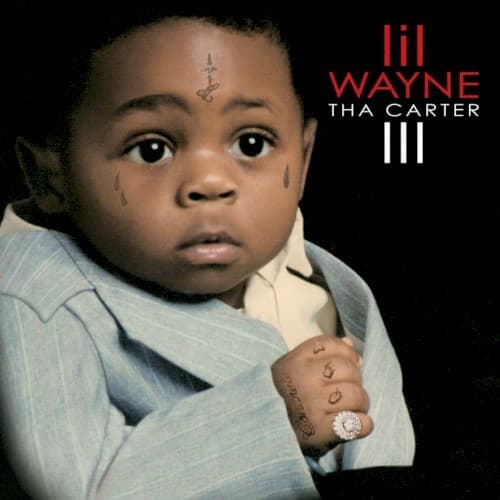
By 2008, Lil Wayne had spent the better part of three years building toward this moment. The leaks, the mixtape dominance, the proclamations of greatness—all of it converged into Tha Carter III, an album that arrived with the weight of expectation and somehow managed to exceed it. This wasn't just another Cash Money Records release; it was Wayne's coronation as the self-proclaimed best rapper alive, backed by sales figures and critical consensus that few could dispute. The sonic ambition sprawled across 23 tracks represents both the peak of Wayne's creative powers and a snapshot of mainstream rap at a crossroads between regional sounds, pop accessibility, and lyrical experimentation.
What strikes you first about Tha Carter III is its refusal to commit to a single sonic identity. Wayne and his production team—anchored by Bangladesh but featuring contributions from Kanye West, The Runners, Deezle, and others—constructed an album that functions as both a victory lap and a creative laboratory. The beats swing wildly between trunk-rattling minimalism, lush R&B interpolations, rock-influenced aggression, and psychedelic soundscapes. This isn't the cohesive sonic statement of a focused artist; it's the sprawling canvas of someone confident enough to try everything at once. The production choices reflect Wayne's moment as rap's most unavoidable figure, where commercial imperative and artistic ambition existed without apparent contradiction.
Maximalist Production Meeting Stream-of-Consciousness Flow
The sonic architecture of Tha Carter III reveals a production philosophy built on contrast and excess. Bangladesh's work on "A Milli" remains the album's defining instrumental—a sparse, menacing loop built around a single synth line and minimal percussion that leaves vast space for Wayne's vocal acrobatics. The beat sounds like it's missing elements intentionally, creating negative space that Wayne fills with layered flows and tonal shifts. It's genius-level restraint in an era when producers typically overcrowded their beats. The way Wayne rides that repetitive synth stab, finding new pockets and rhythmic approaches with each bar, demonstrates the symbiotic relationship between this album's best production and his elastic delivery.
But Bangladesh's minimalism represents just one corner of this album's sonic palette. "Mr. Carter" flips a haunting piano loop and layered strings that give Jay-Z and Wayne a classical backdrop for their competitive verses. The beat breathes, allowing space for contemplative delivery before the drums kick in with understated force. Contrast this with "Got Money," where production feels deliberately synthetic and club-oriented—bright synth stabs, processed handclaps, and T-Pain's Auto-Tuned hook creating a texture designed for maximum radio saturation. The tonal whiplash between these approaches within the same album would sink lesser projects, but Wayne's presence remains the constant that holds everything together.
The guitar-driven tracks reveal Wayne's rock aspirations bleeding into his rap production. "Tie My Hands" layers electric guitar over soul samples and Robin Thicke's vocals, creating something that hovers between rap ballad and rock anthem. "Shoot Me Down" pushes this further with distorted guitar lines that sound like they wandered in from a completely different album. These production choices reflect Wayne's stated admiration for rock music and his desire to blur genre boundaries, though they're not always the album's strongest moments. The guitars feel decorative rather than integral, like Wayne was experimenting with textures without fully committing to the fusion.
Lyrically, Wayne operates in his signature stream-of-consciousness mode, but here it feels more refined and purposeful than on his mixtapes. His wordplay on "3 Peat" establishes the album's lyrical approach immediately—punchlines that rely on double meanings, unexpected metaphors, and tonal delivery as much as the actual words. He's not telling linear stories; he's constructing verbal collages where individual bars shine brighter than overarching narratives. This approach works because the production gives him space to be conversational, aggressive, or melodic depending on the beat's demands. On "Dr. Carter," he frames himself as hip-hop's physician, reviving struggling rappers through his verses—a concept that works because the production maintains a clinical, precise energy that supports the metaphor.
The album's sequencing tells its own story about Wayne's ambitions and commercial calculations. Opening with "3 Peat" signals artistic intent, but the placement of guaranteed hits like "Lollipop" and "Got Money" in the middle stretch reveals the careful balance between credibility and accessibility. The final third of the album sprawls into deeper cuts and experimentation, as if Wayne earned the right to get weird after delivering the singles. This structure mirrors the album's production philosophy—give them what they expect, then surprise them, then remind them why they showed up in the first place.
The Tracks That Secured Wayne's Throne
"A Milli" stands as the album's artistic and commercial apex, a track where production minimalism and lyrical maximalism create perfect tension. Bangladesh stripped away every unnecessary element, leaving Wayne with a hypnotic synth loop and his own voice as the primary instruments. Wayne responded by delivering what might be his most quotable performance—bars that work as standalone punchlines while building into a cohesive showcase of technical ability. The way he modulates his delivery, shifting from rapid-fire triplets to elongated phrases to near-singing, demonstrates complete mastery of rhythm as an instrument. The beat never changes, which forces Wayne to create all the song's dynamics through vocal performance alone.
"Mr. Carter" works as the album's thesis statement, positioning Wayne alongside Jay-Z in a passing-of-the-torch moment that the production underscores with its regal piano arrangement. The beat sounds expensive and deliberate, with strings that rise and fall like orchestral breathing. Jay's verse acknowledges Wayne's moment while reminding everyone of his own legacy; Wayne responds with bars that justify his confidence without disrespecting his elder. The production gives both rappers room to be conversational and technical simultaneously, and the subtle bass that enters during Wayne's verse adds propulsion without overwhelming the track's contemplative mood.
"Lollipop" represents the album's most controversial but undeniably successful gambit—Wayne fully embracing Auto-Tune and melody over a slick, sensual beat built around processed vocals and a deceptively simple drum pattern. The production feels deliberately synthetic, leaning into the robotic vocal effect rather than trying to humanize it. As a pure pop move, it worked spectacularly, but it also revealed Wayne's willingness to prioritize commercial appeal and sonic experimentation over hip-hop traditionalism. The beat's stuttering rhythm and layered vocal processing created a template that would influence countless tracks in the years following, for better or worse.
A Commercial and Creative Peak That Redefined Mainstream Rap
Tha Carter III captures Lil Wayne at the precise intersection of artistic confidence and commercial dominance, a rare moment when a rapper's creative ambitions aligned perfectly with mainstream appetite. The album's production sprawl—from Bangladesh's minimal genius to rock-influenced experiments to unabashed pop confections—reflects an artist secure enough to try everything without worrying about coherence. That approach yields both the album's greatest strengths and occasional weaknesses. Tracks like "A Milli" and "Mr. Carter" represent career-best performances where production and delivery create something greater than their parts, while some of the guitar-heavy experiments feel more like interesting detours than essential moments.
What makes this album work despite its 23-track length and tonal inconsistency is Wayne's unifying presence. His voice—raspy, flexible, capable of shifting from menacing to melodic within bars—remains the constant that holds wildly different production styles together. He sounds completely comfortable over minimalist beats, lush R&B productions, and synthetic pop instrumentals, demonstrating a versatility that few rappers of his era possessed. The album's commercial success wasn't just about hit singles; it was about Wayne convincing a massive audience that his particular brand of lyrical abstraction and sonic adventurousness could dominate the mainstream.
Tha Carter III stands as a document of a specific moment in hip-hop history when regional boundaries had collapsed, Auto-Tune was reshaping vocal possibilities, and a New Orleans rapper could absorb influences from everywhere while sounding distinctly himself. The production choices—maximalist in scope but often minimalist in execution—created space for Wayne's most focused and ambitious performances. Not every experiment succeeds, and the album's length tests patience, but its peaks represent some of the most compelling mainstream rap production and performance of the late 2000s. This is the sound of an artist operating without creative limitations, backed by a production team willing to follow him anywhere.
Track Listing
3 Peat
The album opens with a brash declaration over a lurching, bass-heavy beat that announces Wayne's intentions immediately. The production feels deliberately off-kilter, with drums that hit at unexpected intervals and a synth line that sounds slightly dissonant. Wayne's flow matches the beat's irregularity, delivering punchlines with a conversational arrogance that sets the tone for everything that follows. This track establishes that Tha Carter III will prioritize individual bars over traditional song structure, with Wayne treating the beat as a platform for verbal gymnastics rather than melodic hooks.
Mr. Carter
Jay-Z's presence elevates this track into a generational conversation, but the production deserves equal credit for creating the proper setting. The piano loop sounds expensive and contemplative, with strings that add gravitas without overwhelming the verses. The beat leaves space for both rappers to be technically impressive while maintaining a conversational flow. Wayne holds his own against hip-hop royalty here, delivering some of his most focused bars on the album while the production maintains a regal, unhurried atmosphere that suits the passing-of-the-torch narrative.
A Milli
Bangladesh's production minimalism creates the album's most iconic moment—a hypnotic synth loop and sparse drums that force Wayne to be the song's sole source of dynamics. The beat never changes, which becomes its greatest strength as Wayne finds infinite rhythmic pockets within that simple framework. His delivery shifts from rapid-fire triplets to elongated phrases, creating all the song's movement through vocal performance alone. This track represents the perfect marriage of producer restraint and rapper maximalism, with Wayne treating the repetitive instrumental as an invitation to showcase every flow pattern in his arsenal.
Got Money
T-Pain's Auto-Tuned hook and bright, synthetic production signal a deliberate play for commercial dominance. The beat features processed handclaps and digital synth stabs that sound intentionally artificial, creating a club-ready texture that dominated radio throughout 2008. Wayne matches the production's glossy surface with verses that prioritize catchy phrasing over dense wordplay. The track works as pure pop-rap craftsmanship—calculated, effective, and unashamed of its commercial aspirations. The production's crisp digital sheen became a blueprint for mainstream rap in the years following.
Comfortable
Babyface's production brings R&B smoothness to Wayne's typically aggressive approach, with layered keyboards and a relaxed tempo that encourages melodic delivery over rapid-fire bars. The beat feels expensive and polished, creating space for Wayne to explore singing and softer tonal delivery. This track showcases his versatility, demonstrating comfort with slower tempos and romantic themes while maintaining his distinctive vocal character. The lush production creates one of the album's most sonically pleasant moments, even if it lacks the edge of Wayne's harder-hitting tracks.
Dr. Carter
The concept here—Wayne as hip-hop's physician reviving struggling rappers—works because the production maintains a clinical, precise energy. The beat features sharp snares and a looped sample that sounds almost medical in its repetitive precision. Wayne's verses demonstrate technical virtuosity while maintaining the healing metaphor, and the production's steady, metronomic quality supports his claim to rap's resuscitative powers. The skit elements integrated into the beat add texture without overwhelming the core instrumental, creating one of the album's most cohesive concept-to-production marriages.
Phone Home
This deeper cut features atmospheric production with echoing synths and a spacious mix that gives Wayne room to explore more abstract lyrical territory. The beat feels expansive and slightly psychedelic, with reverb-heavy elements that create a dreamy, floating sensation. Wayne's delivery matches the production's open texture, sounding more contemplative than aggressive. The track represents the album's experimental side, where commercial considerations take a backseat to sonic exploration and Wayne's desire to push beyond traditional rap structures.
Tie My Hands
Robin Thicke's soulful vocals and the guitar-driven production create the album's most overtly emotional moment, addressing Hurricane Katrina's aftermath with production that matches the subject's gravity. The beat layers electric guitar over soul samples, building toward a rock-influenced climax that reflects Wayne's genre-blurring ambitions. The production feels cinematic and deliberate, giving both Wayne and Thicke space for earnest, direct delivery. While the guitar elements sometimes feel decorative, the track's emotional weight comes through clearly in the mix's lush layering.
Mrs. Officer
Bobby Valentino's sung hook and the reggae-influenced beat create one of the album's most playful moments, with production that bounces with Caribbean-tinged rhythm. The instrumental features bright keyboard stabs and a syncopated drum pattern that encourages Wayne's most melodic delivery on the album. The beat's lightness matches the song's flirtatious theme, demonstrating Wayne's ability to adapt his delivery to match production mood. The mix emphasizes the hook's catchiness while keeping Wayne's verses clear and present, balancing pop accessibility with rap credibility.
Let the Beat Build
The production here does exactly what the title promises—starting minimal and gradually adding layers as Wayne's flow intensifies. The beat begins with sparse drums and a simple melody before expanding into a fuller arrangement that supports Wayne's increasingly aggressive delivery. This track showcases patient production that trusts the artist to carry the song's early moments before providing sonic reinforcement. Wayne's technical performance escalates alongside the beat's growing complexity, creating one of the album's most satisfying rapper-producer collaborations.
Shoot Me Down
Distorted guitar lines dominate this production, creating one of the album's most rock-influenced moments. The beat feels heavier and more aggressive than most of Tha Carter III, with grinding guitars that border on metal territory. Wayne's delivery matches the instrumental's intensity, though the production's rock elements feel more like decoration than full integration. The track works as an experiment in genre fusion, even if the guitar-rap marriage doesn't achieve the seamless blending Wayne might have intended.
Lollipop
Static Major's posthumous production contribution and Wayne's full embrace of Auto-Tune created the album's biggest commercial moment and most controversial artistic choice. The beat features stuttering rhythms, processed vocal samples, and a deliberately synthetic texture that leans into robotic vocal effects rather than humanizing them. As pure pop production, it's undeniably effective—the beat's slick digital sheen and infectious rhythm created a template countless artists would follow. Wayne's Auto-Tuned delivery transforms him into a melodic instrument, prioritizing vibe over lyrical density in service of maximum commercial appeal.
La La
This track features bouncy, synth-heavy production with bright keyboard melodies and crisp drums that create an upbeat, almost celebratory atmosphere. The beat's lightness gives Wayne space to experiment with sing-song delivery and catchier phrasing than his typical dense wordplay. The production feels radio-friendly without being overly calculated, striking a balance between commercial appeal and Wayne's artistic identity. The mix emphasizes the melodic elements while keeping enough bass presence to maintain hip-hop credibility.
Pussy Monster
The instrumental here ventures into the album's stranger sonic territory, with distorted production elements and an aggressive, chaotic energy. The beat sounds deliberately unsettling, matching the provocative title with production that refuses easy categorization. Wayne's delivery leans into the track's weirdness, treating the abrasive instrumental as an invitation to push lyrical boundaries. This represents the album's most uncompromising moment, where commercial considerations seem entirely absent in favor of pure creative impulse.
You Ain't Got Nuthin'
Fabolous and Juelz Santana join Wayne over a beat built around haunting vocal samples and hard-hitting drums. The production creates a menacing atmosphere that brings out more traditional New York-influenced flows from all three rappers. The beat's darkness contrasts with much of the album's brighter production, offering a brief return to street-oriented rap sonics. The mix gives each rapper clear space for their verses while maintaining the instrumental's threatening mood throughout.
DontGetIt
This deeper cut features atmospheric production with layered synths and a slower tempo that encourages introspective delivery. The beat creates space for Wayne to be more vulnerable and contemplative than usual, with production that sounds deliberately understated. The instrumental's mellow texture and patient pacing make this one of the album's most sonically subdued moments, demonstrating that Wayne's versatility extends to matching mellower production moods without losing his distinctive vocal character.
Action
An unreleased track that appeared on some versions features aggressive production with distorted elements and hard-hitting drums. The beat maintains high energy throughout, encouraging Wayne's most rapid-fire delivery. The production feels raw and slightly unfinished compared to the album's more polished moments, which actually works in its favor by adding sonic variety to Tha Carter III's sprawling length. Wayne's flow matches the instrumental's relentless pace, creating one of the album's most intense pure rap moments.
Whip It
This track features production built around a simple, repetitive hook with bright synths and crisp percussion. The beat's straightforward structure gives Wayne space for catchy phrasing and melodic delivery, prioritizing memorability over complexity. The production feels deliberately designed for clubs and radio, with a clean mix that emphasizes the hook's catchiness. Wayne adapts his delivery to match the beat's commercial intentions while maintaining enough personality to keep the track from feeling generic.
I'm Me
The production here features a dramatic orchestral sample layered over hard-hitting drums, creating a cinematic backdrop for Wayne's declarations of individuality. The beat sounds expensive and deliberately grandiose, matching Wayne's confident assertions with production that suggests importance and scale. The string arrangements and booming bass create tension between elegance and street credibility, with Wayne's delivery bridging both worlds. This track showcases production ambition that elevates standard braggadocio into something that feels genuinely monumental.
Gossip
This track features production that sounds deliberately vintage, with a soul sample and drum break that recall earlier hip-hop eras. The beat's throwback quality contrasts with much of the album's more modern production, offering sonic variety while demonstrating Wayne's ability to adapt to different production styles. The instrumental's warm, organic texture creates one of the album's most traditionally hip-hop moments, proving Wayne doesn't need synthetic production to dominate a track.
Kush
The production here creates a hazy, laid-back atmosphere with slow-rolling drums and atmospheric synths that match the title's implications. The beat encourages Wayne's most relaxed delivery on the album, with a spacious mix that feels deliberately unhurried. The production's mellow vibe offers a breather in the album's final stretch, demonstrating Wayne's comfort with different tempos and moods. The instrumental's warm texture and patient pacing create one of Tha Carter III's most sonically pleasant moments.
Love Me or Hate Me
This track features production that strikes a balance between aggression and melody, with layered synths and hard drums creating tension between accessibility and edge. The beat gives Wayne space to address criticism and haters while maintaining sonic appeal that prevents the track from feeling purely defensive. The production's polished texture keeps the song from sounding bitter despite its confrontational lyrics, with a mix that emphasizes both the melodic hook and Wayne's more aggressive verses equally.
Talkin' About It
The album closes with production that feels appropriately conclusive—a beat that combines many of the album's sonic elements into one final statement. The instrumental features layered production with both melodic and aggressive elements, giving Wayne space to reflect on his journey while maintaining the confidence that defined the entire project. The production feels deliberately full and complete, as if summarizing everything that came before while pointing toward future possibilities. Wayne's delivery matches the beat's comprehensive quality, sounding simultaneously satisfied and hungry for more.