2Pac's Darkest Hour Produces His Most Introspective Work
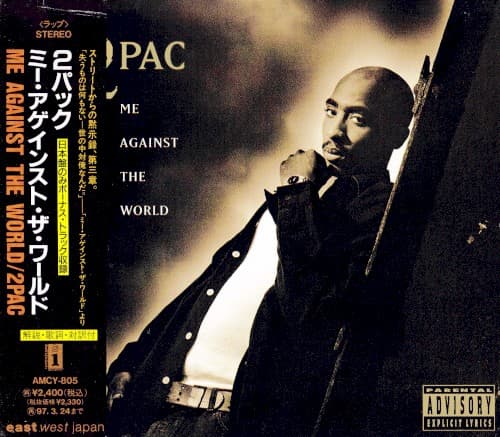
When Me Against the World arrived in March 1995, Tupac Shakur was incarcerated at Clinton Correctional Facility in New York, facing serious legal battles while navigating an increasingly hostile music industry landscape. The album debuted at number one on the Billboard 200, making 2Pac the first artist to achieve that feat while serving a prison sentence. Yet commercial success barely captures what makes this record essential—it represents a creative pivot from a young artist confronting mortality, isolation, and the consequences of the lifestyle he both celebrated and questioned. Recorded largely before his incarceration, the material reflects someone taking inventory of their life at twenty-three, uncertain if they would see twenty-four. The paranoia and anger that defined earlier work remain present, but they coexist with vulnerability rarely heard in mid-nineties rap.
This stands as 2Pac's third studio album, following 2Pacalypse Now and Strictly 4 My N.I.G.G.A.Z., but it marks a dramatic shift in artistic approach. Where previous projects balanced social commentary with street narratives, Me Against the World turns inward. The production favors somber soul samples and minor-key melodies over the funk-driven West Coast sound dominating radio. Tony Pizarro, Easy Mo Bee, and Shock G each contribute work that feels deliberately stripped-down, creating space for 2Pac to deliver some of his most emotionally exposed performances. The album's title captures its essence—one man against systemic oppression, industry politics, street violence, and his own self-destructive impulses.
Vulnerability as Artistic Strategy in a Gangsta Rap Era
The production architecture across these fifteen tracks establishes a melancholic foundation that distinguishes this work from typical West Coast releases of the period. While Death Row Records was engineering G-funk's commercial dominance through Dre's synthesizer-heavy approach, Me Against the World reaches back to earlier hip-hop traditions. Easy Mo Bee's work on multiple tracks incorporates jazz and soul samples with minimal embellishment, allowing bass lines and piano loops to breathe. The sonic palette feels deliberately sparse—drum programming stays simple, avoiding the layered complexity of contemporary productions. This restraint serves the material's emotional weight. When 2Pac delivers lines about contemplating his own funeral or questioning whether his struggles serve any purpose, the music doesn't compete for attention.
Lyrically, the album explores territory that commercial rap largely avoided in 1995. 2Pac examines depression, suicidal ideation, and spiritual doubt with specificity that goes beyond posturing. He discusses therapy, medication, and the psychological toll of constant violence without framing these admissions as weakness. The vulnerability reads as calculated artistic choice rather than unintentional exposure—he understands that this material differentiates him within a crowded marketplace. Yet the execution feels genuine rather than exploitative. His vocal delivery across these tracks shifts between the aggressive bark familiar from earlier work and a more measured, almost conversational tone that draws listeners closer. The technical skill remains evident—internal rhyme schemes, rhythmic variation, storytelling structure—but deployed in service of emotional communication rather than pure lyrical exhibition.
The album navigates a complex relationship with the street narratives that built 2Pac's reputation. Tracks about criminal lifestyle and confrontation with enemies appear throughout, but they exist alongside material that questions whether that lifestyle offers anything beyond early death or incarceration. This duality creates tension throughout the listening experience. One track celebrates hustling and warns adversaries, the next contemplates the futility of that same existence. Rather than undermining the album's cohesion, this contradiction mirrors the actual psychology of young men trapped between limited economic options and awareness that those options lead nowhere sustainable. The production choices reinforce this thematic ambivalence—even harder tracks maintain the album's melancholic undertone, preventing full escape into aggression.
The sequencing demonstrates sophisticated understanding of emotional arc. The album opens with confrontational material before gradually introducing more introspective content, then alternates between modes rather than maintaining linear progression. This structure prevents the record from feeling oppressively dark while avoiding the tonal whiplash that plagues many rap albums attempting thematic range. Transitions between tracks feel deliberate, with similar sonic textures connecting disparate lyrical content. The album's length—over seventy minutes including the bonus mix—tests contemporary attention spans, but most tracks justify their inclusion through distinct perspective or musical approach. Only the extended runtime feels like a concession to mid-nineties CD-era maximalism, where artists filled available space regardless of whether material warranted it.
Contextually, Me Against the World arrived during hip-hop's commercial explosion but before the genre's lyrical introspection became commercially viable. Artists like Scarface had explored vulnerability within Southern rap, but West Coast releases largely maintained harder exterior presentation. 2Pac's willingness to center an entire album around doubt and emotional pain, while maintaining street credibility, opened creative space for subsequent artists. The album sold over three million copies despite—or perhaps because of—its departure from established formulas, demonstrating that audiences responded to authenticity even when that authenticity meant admitting fear and pain rather than projecting invincibility.
Career-Defining Moments Embedded in Personal Crisis
Dear Mama transcends the album to become one of hip-hop's most culturally significant singles, achieving what few rap songs manage—mainstream acceptance without artistic compromise. The track balances honest acknowledgment of his mother's crack addiction with appreciation for her sacrifices, refusing to sanitize either reality. Tony Pizarro's production, built around a Joe Sample interpolation, provides warmth without sentimentality. The song demonstrated that personal narrative could achieve commercial success without conforming to radio formulas, influencing countless subsequent artists exploring family relationships. Its inclusion here, alongside the album's darker material, provides necessary emotional relief without disrupting overall tone.
So Many Tears stands as perhaps the album's most devastating track, with 2Pac cataloging losses and contemplating his own mortality over Shock G's haunting production. The vocal performance captures exhaustion rather than anger—he sounds like someone genuinely uncertain whether continuing the fight remains worthwhile. Specific details about friends' deaths and the psychological toll of constant violence create intimacy that broader statements about struggle couldn't achieve. The track exemplifies the album's core strength: willingness to examine pain without offering easy resolution or false hope.
Me Against the World, the title track, synthesizes the album's thematic concerns into four minutes that function as mission statement. 2Pac frames his struggles as both personal and systemic, acknowledging his own mistakes while identifying external forces that constrained his options from birth. The production maintains the album's melancholic tone while incorporating enough rhythmic drive to prevent the track from feeling static. His vocal delivery alternates between weary reflection and defiant assertion, capturing the psychological complexity of someone refusing to surrender despite recognizing the odds. The track works because it avoids simple victimhood—he claims agency even while cataloging the obstacles working against him.
A Blueprint for Introspective Rap That Maintains Commercial Viability
Me Against the World deserves recognition as one of the nineties' essential hip-hop albums, not despite its vulnerability but because of it. The record proved that rap audiences would embrace complexity and emotional honesty when delivered with authenticity and technical skill. Its influence extends beyond direct musical descendants to shape how the genre approaches mental health, mortality, and the contradictions within street life. The album's few weaknesses—occasional redundancy across fifteen tracks, moments where the melancholy tips toward self-pity—feel minor against its substantial achievements. 2Pac created a document that captures a specific moment in his evolution while addressing universal experiences of young men navigating impossible circumstances.
The production choices, favoring atmosphere over innovation, have aged remarkably well compared to more sonically adventurous mid-nineties releases that now sound dated. The stripped-down approach allows the material to breathe, and 2Pac's vocal performances remain powerful decades later. What the album sacrifices in sonic experimentation it gains in timeless quality—these tracks could have been recorded in several different eras without fundamental changes to approach. The album succeeds where many introspective rap records fail: it maintains genuine emotion throughout without becoming monotonous or overly precious. 2Pac understood that vulnerability required the same intensity and commitment as aggression, and he delivered both with equal conviction. Me Against the World stands as the creative peak of his too-brief career, the moment where raw talent, lived experience, and artistic maturity converged to produce something that transcended its immediate context to become permanently relevant.
Track Listing
Intro
A brief atmospheric opening that establishes the album's somber tone without extended spoken-word content. The production uses minimal instrumentation to create mood, signaling departure from celebratory West Coast aesthetics. This functions as necessary palette cleanser, preparing listeners for the emotional weight ahead rather than serving as standalone track.
If I Die 2Nite
The album's proper opening track confronts mortality directly, with 2Pac questioning whether his death would matter beyond immediate circle. The production maintains energy while incorporating minor-key elements that prevent the track from feeling like typical gangsta rap bravado. His delivery balances defiance with genuine uncertainty, establishing the album's core tension between street posturing and introspective doubt.
Me Against the World
The title track synthesizes the album's thematic concerns, framing 2Pac's struggles as both personal failings and systemic oppression. The production by Soulshock and Karlin incorporates melancholic piano lines that enhance the reflective lyrics without overwhelming them. His vocal performance captures exhaustion and determination simultaneously, creating one of the album's most emotionally complex moments that rewards repeated listening.
So Many Tears
Perhaps the album's most devastating track emotionally, built around Shock G's haunting production that incorporates Stevie Wonder samples. 2Pac catalogs specific losses and trauma with detail that creates genuine intimacy, avoiding the generalized pain that weakens similar attempts at vulnerability. The chorus captures psychological exhaustion rather than anger, with his vocal delivery suggesting someone genuinely uncertain whether survival remains worthwhile or achievable.
Temptations
This track examines the lifestyle contradictions that trap many young men in destructive cycles, with 2Pac acknowledging his own complicity rather than claiming pure victimhood. The production incorporates elements that nod toward commercial appeal without sacrificing the album's overall tone. His exploration of material temptation and immediate gratification versus long-term consequences adds nuance to the album's examination of street life.
Young Niggaz
A track addressing the next generation with mixture of warning and solidarity, acknowledging limited options facing young Black men while cautioning against repeating his mistakes. The production maintains harder edge than surrounding material, providing necessary energy shift. His delivery here balances mentorship with recognition that he lacks moral authority to preach, creating authenticity often missing from similar cautionary tales.
Heavy in the Game
This cut celebrates hustling and street success with energy that contrasts the album's more introspective moments, demonstrating 2Pac's refusal to fully abandon the narratives that built his career. The production incorporates funk elements that recall earlier West Coast work, providing sonic variety. The track's placement prevents the album from becoming oppressively somber while maintaining thematic connection through its examination of survival strategies.
Lord Knows
A spiritual questioning track where 2Pac addresses God directly, demanding explanations for suffering and systemic injustice. The production uses soul samples effectively, creating foundation for his theological interrogation. His approach avoids both cynical atheism and blind faith, instead presenting someone genuinely wrestling with belief systems that promise deliverance while immediate reality suggests abandonment by any higher power.
Dear Mama
The album's most commercially successful track balances honest acknowledgment of his mother's addiction with deep appreciation for her sacrifices and unconditional love. Tony Pizarro's production, built around Joe Sample interpolation, provides warmth without sentimentality or manipulation. The track's cultural impact extends beyond the album itself, becoming one of hip-hop's most recognized tributes to maternal figures and demonstrating commercial viability of personal narrative without artistic compromise.
It Ain't Easy
This track examines the psychological toll of constant struggle with specificity that prevents it from becoming generic motivational content. The production maintains the album's melancholic foundation while incorporating enough rhythmic variation to sustain interest. 2Pac's vocal delivery here sounds genuinely weary rather than performed, adding authenticity to material that could easily tip into self-pity without his commitment to honest self-examination.
Can U Get Away
A romantic narrative that provides necessary emotional relief from the album's heavier material, exploring desire for escape with someone who understands his circumstances. The production incorporates R&B elements without fully crossing into different genre territory. The track adds dimension to 2Pac's persona, demonstrating capacity for tenderness alongside the aggression and vulnerability dominating other material, while maintaining thematic connection through its examination of seeking refuge from hostile environment.
Old School
This track pays tribute to earlier hip-hop while examining how the culture's commercial expansion changed fundamental dynamics. The production consciously recalls eighties aesthetics through sample choices and drum programming, creating nostalgic foundation. 2Pac's reflection on hip-hop's evolution adds perspective often missing from mid-nineties releases, acknowledging losses alongside gains as the genre achieved mainstream acceptance and commercial viability.
Fuck the World
The album's angriest moment channels frustration and resentment into concentrated verbal assault on systems and individuals 2Pac holds responsible for his circumstances. The production maintains aggressive edge while incorporating the album's characteristic minor-key melancholy, preventing full escape into rage. His delivery here captures someone pushed beyond diplomatic engagement, offering cathartic release after extended introspection while risking the self-awareness demonstrated elsewhere.
Death Around the Corner
A paranoid meditation on mortality and inevitable violence that feels genuinely unsettling rather than performative. The production uses ominous bass lines and sparse instrumentation to enhance the track's psychological claustrophobia. 2Pac's vocal performance captures someone convinced their death approaches soon, examining that certainty without bravado or false acceptance, creating one of the album's most psychologically complex moments.
Outlaw
The album's closing statement before the bonus track reasserts 2Pac's defiance and refusal to conform despite the consequences cataloged throughout previous material. The production provides harder edge suitable for closing sequence while maintaining sonic connection to earlier tracks. His delivery balances the vulnerability shown throughout the album with determination to continue fighting regardless of odds, preventing the record from ending on note of pure defeat or resignation.
Dear Mama (Moe Z. mix)
A remixed version of the album's breakthrough single that serves as bonus content rather than necessary inclusion. The altered production provides different sonic approach to familiar material without fundamentally changing the track's emotional impact or thematic content. Its placement after the proper album conclusion feels like label concession to maximize commercial potential of the most radio-friendly material available.