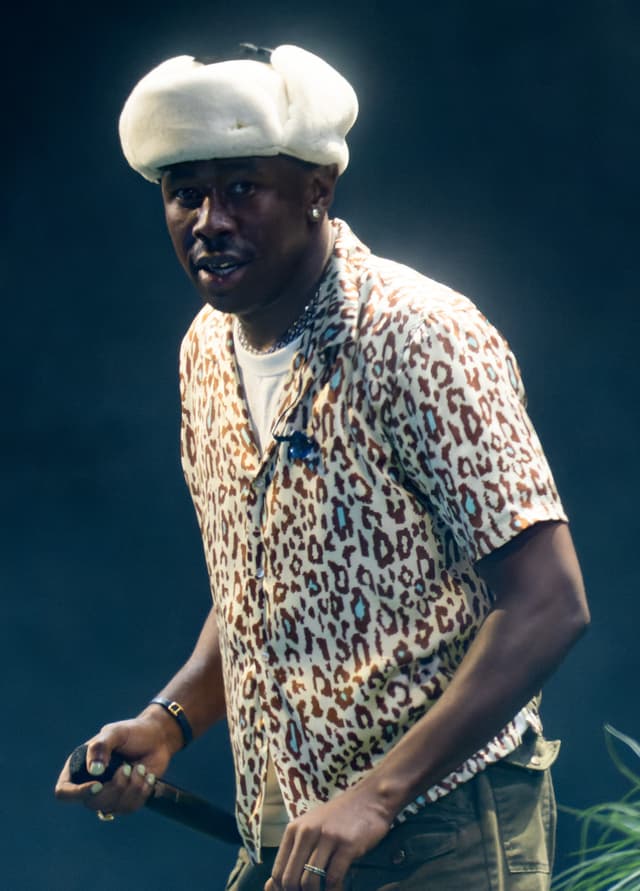
From Odd Future Chaos to Genre-Defying Artistry
Tyler, The Creator emerged from the digital underground in 2009 as the abrasive ringleader of Odd Future Wolf Gang Kill Them All, a Los Angeles collective that felt less like a rap group and more like a cultural insurgency. With deliberately offensive lyrics, lo-fi production aesthetic, and a D.I.Y. distribution model that bypassed traditional industry gatekeepers, Tyler Gregory Okonma announced himself as hip-hop's most confrontational new voice. His early work trafficked in shock value and horrorcore provocation, but beneath the transgressive surface lurked a restless creative intelligence that refused categorization.
What makes Tyler's trajectory remarkable isn't just his evolution—it's the completeness of his transformation. The artist who once built his reputation on nihilistic antagonism has become one of contemporary music's most sophisticated composer-producers, crafting lush sonic landscapes that draw equally from soul jazz, yacht rock, and symphonic arrangement. Born in Ladera Heights and raised in various Los Angeles neighborhoods, Tyler taught himself music production as a teenager, creating album artwork and beats with the same obsessive attention to detail. That self-taught approach, combined with an unfiltered artistic vision, has allowed him to mature on his own terms, building a career that answers to no one but himself.
By the time he released "Flower Boy" in 2017, Tyler had completed one of hip-hop's most dramatic artistic reinventions, moving from provocateur to auteur without losing the idiosyncratic perspective that made him compelling in the first place. He's not just a rapper anymore—he's a producer, designer, festival curator, and creative director whose influence extends across music, fashion, and youth culture. His refusal to stay within prescribed boundaries has made him both a polarizing figure and an undeniable innovator.
Maximalist Production Meets Confessional Intimacy
Tyler's production style has undergone seismic shifts across his discography, moving from the murky, distorted beats of his early work to the ornate, multi-layered compositions that define his recent output. His signature approach involves dense harmonic stacking—synth lines, string arrangements, bass clarinet, flute passages, and analog warmth combining to create textures that feel simultaneously vintage and futuristic. He constructs beats like a jazz arranger rather than a traditional hip-hop producer, favoring chord progressions that drift through unexpected modulations and melodic phrases that prioritize mood over conventional song structure. The influence of Pharrell Williams looms large, particularly in Tyler's fascination with bright, major-key melodies that subvert hip-hop's minor-key conventions.
As a vocalist, Tyler's technical limitations have paradoxically become strengths. His rapping voice carries a nasal, conversational quality—sometimes talk-rapped, sometimes melodically sung through vocoder effects—that prioritizes personality over polish. He rarely attempts technical pyrotechnics, instead deploying a deadpan delivery that heightens both his humor and his vulnerability. His alter-egos (Wolf Haley, Sam, and others) allowed him to explore different emotional registers in his early work, though he's largely abandoned these personas for more direct first-person confession. When he sings, which he does increasingly, his voice remains deliberately unrefined, processing and layering compensating for limited range while maintaining emotional immediacy.
The sonic evolution from "Goblin" to "Call Me If You Get Lost" represents a complete aesthetic overhaul. Where early Tyler favored minimal, bass-heavy production with horror-film ambiance, mature Tyler embraces lush instrumentation: harpsichords, string sections, jazz drumming, and carefully arranged vocal harmonies. His current sound exists somewhere between the orchestral soul of Curtis Mayfield, the psychedelic funk of Funkadelic, and the glossy R&B production of The Neptunes. He's not afraid of beauty anymore, and that willingness to be earnest rather than ironic has unlocked new emotional dimensions in his music.
Evolution Through Controversy: Tyler's Artistic Metamorphosis
Tyler's career began in the digital trenches of Tumblr and YouTube, where Odd Future's guerrilla marketing and deliberately confrontational aesthetic attracted a devoted cult following before any major label involvement. His 2009 mixtape "Bastard" introduced his dark psychological landscape—absent father narratives, violent fantasies, and therapy session framing devices—with production that sounded like it was recorded in a bedroom because it was. When "Yonkers" went viral in 2011, its cockroach-eating video and menacing minimalism made Tyler simultaneously infamous and impossible to ignore. "Goblin," his XL Recordings debut that same year, amplified everything controversial about his early work, earning him both a devoted fanbase and widespread criticism for homophobic and misogynistic lyrics that he'd later acknowledge and distance himself from.
"Wolf" in 2013 marked the beginning of his musical maturation, incorporating jazz samples, more sophisticated production techniques, and narrative ambition that extended beyond provocation. The album introduced characters and storyline elements that Tyler would revisit across subsequent projects, suggesting a developing interest in world-building rather than just shock tactics. "Cherry Bomb" two years later represented his most experimental and polarizing work—abrasive, distorted, and deliberately inaccessible in ways that frustrated even longtime fans. Critics dismissed it as self-indulgent noise, but in retrospect, it served as a necessary transitional album, Tyler working through influences and production techniques that would crystallize on later projects.
The commercial and critical breakthrough arrived with "Flower Boy" in 2017, an album that felt like Tyler finally stopped hiding behind personas and provocations. Lush, introspective, and tinged with loneliness, it featured subtle explorations of his sexuality, his feelings of isolation despite fame, and his relationship with creative success. The production glowed with warm synths, layered harmonies, and guest appearances from artists like Frank Ocean and Estelle that felt collaborative rather than transactional. The album earned Tyler his first Grammy nomination and repositioned him in the cultural conversation—no longer the troublemaker but the auteur. "Igor" in 2019 pushed even further into experimental territory, a heartbreak concept album that subordinated rapping to singing, leaned heavily on synth-driven production, and won the Grammy for Best Rap Album despite barely qualifying as a rap record in any traditional sense.
"Call Me If You Get Lost" in 2021 represented yet another pivot, Tyler reengaging with traditional rap structures while maintaining his expanded sonic palette. DJ Drama provided hyped-up DJ drops that recalled Southern mixtape culture, while Tyler's rapping regained prominence alongside his continued melodic experimentation. The album topped the Billboard 200, won another Grammy, and demonstrated Tyler's ability to code-switch between artistic modes without losing his core identity. At this point in his career, he'd achieved something rare: complete creative freedom, mainstream commercial success, and critical respect—while maintaining the independent spirit that defined his early work.
Redefining Creative Control and Youth Culture Aesthetics
Tyler's most significant contribution to hip-hop might be his insistence on total creative control—not just over his music, but over every aspect of his artistic presentation. His Golf Wang clothing line, Camp Flog Gnaw festival, and meticulously designed album rollouts demonstrate an understanding of music as just one component of a larger aesthetic universe. He's influenced a generation of artists to think beyond rapping, to understand themselves as multi-disciplinary creators whose visual presentation, fashion choices, and brand identity matter as much as their bars. His model of independence—owning his masters, controlling his distribution, building his own festival platform—provides a blueprint for artistic autonomy in an era of label consolidation and streaming platform dominance.
His impact on contemporary hip-hop aesthetics is equally profound. The bright colors, retro typography, and deliberately nerdy fashion sensibility he championed stand in direct opposition to the luxury-brand flexing and street credibility markers that dominated 2010s rap. Artists like Frank Ocean (his Odd Future collaborator who became one of R&B's most important voices), who've embraced genre fluidity and emotional vulnerability, owe something to the space Tyler helped create. His willingness to make uncool music cool—to embrace jazz fusion, to sing off-key, to admit loneliness and romantic failure—has expanded hip-hop's emotional vocabulary.
Yet his legacy remains complicated by his early work. The homophobic slurs, misogynistic violence fantasies, and edgelord provocations of his first albums have been alternately defended as satirical character work and condemned as genuinely harmful. Tyler himself has expressed regret and evolution, but those early records exist as permanent documentation of that phase. His growth narrative—from provocateur to respected artist—is compelling precisely because it's not a simple redemption arc. He didn't apologize and disappear; he made better art, demonstrated growth through action rather than statements, and let the work speak for itself. Whether that's sufficient remains a matter of ongoing debate, but his influence on hip-hop's creative possibilities, its relationship to genre boundaries, and its embrace of artistic control is undeniable.