From Atlanta Underground to Avant-Garde Trap Visionary
Playboi Carti emerged from Atlanta's sprawling underground in the mid-2010s as something different — a rapper who treated his voice as pure texture rather than semantic delivery vehicle. Born Jordan Terrell Carter in 1996, he initially gravitated toward fashion and street culture before music became his primary expression. His early SoundCloud loosies and features caught attention not for technical prowess but for something harder to define: an intuitive sense of how a voice could melt into production, becoming inseparable from the beat itself.
His breakthrough came through strategic positioning within hip-hop's interconnected network. Early association with Father and Awful Records connected him to Atlanta's weirder experimental edges, while a relationship with A$AP Rocky's mob brought coastal visibility and fashion credibility. By 2017, his self-titled debut mixtape introduced a singular aesthetic — minimal, spacey, built around ad-libs and repetition rather than traditional verse structure. Tracks felt unfinished in the best way, sketches that prioritized vibe over completeness.
What separates Playboi Carti from peers is his willingness to operate at the extremes. Where many artists balance accessibility with experimentation, he commits fully to sonic disruption. His projects feel less like traditional rap albums and more like immersive installations, demanding adjustment from listeners conditioned to expect hooks, clarity, and conventional song architecture. This approach has made him both wildly influential among younger artists and perpetually divisive among traditionalists who value lyricism and narrative coherence.
Minimalist Maximalism: The Sonic Architecture of Playboi Carti
Playboi Carti's production choices reveal an artist obsessed with space and atmosphere. He gravitates toward beats that breathe — airy, hypnotic, often constructed around a single looped element that repeats until it achieves trance-like quality. His collaboration with Pi'erre Bourne defined his early sound: melodic, almost psychedelic trap instrumentals that shimmer and pulse. These beats don't push forward aggressively; they hover, creating environments where Carti's voice can float and dart unpredictably.
Vocally, he operates in fragments. Traditional bars give way to repeated phrases, stretched syllables, and an arsenal of ad-libs that function as primary melodic content. His baby voice — a polarizing high-pitched delivery that became more pronounced across his career — treats language as pure sound. Words blur into the production, prioritizing phonetic pleasure over semantic meaning. This isn't carelessness; it's intentional deconstruction. He understands that in contemporary rap, how something sounds can matter more than what it says.
The evolution toward harsher, more abrasive textures marked his most dramatic shift. Where early work floated on cloud rap's dreamy foundations, later material embraced distortion, aggression, and industrial influence. Beats became denser, more chaotic, layered with screaming synths and rattling percussion. His vocal delivery followed suit — more guttural, primal, occasionally incomprehensible. This pivot toward what fans call rage music or rage rap represents his refusal to settle into a comfortable lane, instead pushing toward sonic extremity that challenges even his established audience.
Calculated Chaos: Tracing Playboi Carti's Strategic Career Arc
Carti's initial visibility came through persistent hustling in Atlanta's competitive underground. Early tracks posted to SoundCloud in 2015 caught modest attention, but his real breakthrough arrived through strategic features and cosigns. His appearance on A$AP Mob tracks introduced him to broader audiences, while his association with Awful Records grounded him in Atlanta's experimental scene. This dual positioning — both mainstream-adjacent and underground-credible — became a defining career strategy.
His self-titled 2017 mixtape arrived with minimal promotion but significant impact. Distributed through Interscope and AWGE, the project felt deliberately raw, almost unfinished. Tracks like "Magnolia" and "wokeuplikethis*" became viral moments, fueled by Carti's infectious ad-libs and Pi'erre Bourne's elastic production. The mixtape succeeded by feeling accidental, like listeners had discovered private recordings rather than a calculated commercial release. This aesthetic of anti-polish became his signature, making traditional album rollouts seem overproduced and focus-grouped by comparison.
Die Lit arrived in May 2018 as his proper debut album, and it represented expansion without compromise. Nineteen tracks deep, the project doubled down on everything that made the mixtape work while pushing further into experimental territory. The production palette widened — more producers, more sonic diversity, yet cohesive in its commitment to atmosphere over structure. Critics initially divided on its lack of obvious singles or radio-ready moments, but the album's reputation grew steadily. It captured something essential about how young listeners consumed music: not as discrete songs but as continuous mood, soundtrack to late nights and altered states. The album's critical reevaluation positioned it as one of trap's most forward-thinking statements, proving Carti's instincts right.
The three-year gap between Die Lit and Whole Lotta Red became its own narrative. Endless snippets leaked online, building mythology around unreleased material. Fans dissected Instagram live sessions and paparazzi videos for sonic clues. Carti leaned into the chaos, allowing speculation to amplify anticipation while remaining almost entirely silent in traditional media. This approach — letting absence create desire — felt perfectly calibrated for social media era marketing.
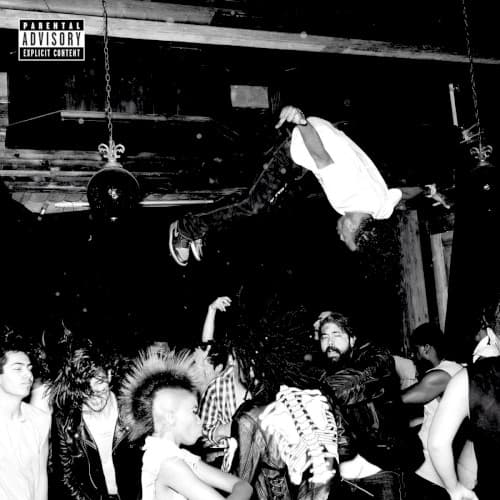
When Whole Lotta Red finally dropped on Christmas 2020, it shocked even devoted fans. Gone were the melodic, floaty elements of earlier work. The album opened with distorted, punk-influenced aggression that sounded nothing like the leaked snippets fans expected. Vocal delivery turned harsher, more abrasive, occasionally bordering on screaming. Initial fan reaction skewed negative — this wasn't the Carti they thought they wanted. But within weeks, opinion shifted dramatically. The album's uncompromising vision, its refusal to deliver expected sounds, earned respect as bold artistic statement. It debuted at number one on the Billboard 200, proving his commercial viability even when making deliberately difficult music.
His subsequent years have been marked by extreme selectivity. Minimal features, almost no interviews, rare public appearances. He's become more mythological figure than traditional celebrity, existing primarily through leaked music, cryptic social media posts, and occasional viral moments. This scarcity makes every release feel like an event, maintaining cultural relevance without constant output. His ability to dominate conversation while remaining largely invisible represents modern celebrity strategy perfected.
Playboi Carti's Enduring Influence on Contemporary Rap's Sonic Future
Playboi Carti's most significant impact lies in permission granted: permission to prioritize sound over sense, vibe over virtuosity, feeling over technical demonstration. An entire generation of rappers now uses their voice as textural instrument rather than lyrical vehicle, tracing lineage directly to his approach. The proliferation of baby voice delivery, excessive ad-libs as melodic content, and minimalist repetition across SoundCloud and mainstream rap alike reveals his fingerprints everywhere.
His influence extends beyond sound into rollout strategy and artist mystique. The model of strategic silence, leaked snippets building anticipation, and delayed gratification maximizing impact has become standard practice. He demonstrated that in the streaming era, traditional promotional cycles matter less than maintaining aura and letting scarcity create demand. Younger artists study not just his music but his entire approach to public presence — or deliberate lack thereof.
Critically, Die Lit's reputation continues growing, now frequently cited among the decade's most influential trap albums. Its impact wasn't immediate commercial dominance but gradual infiltration into how artists think about album construction, sonic cohesion, and the relationship between repetition and hypnotic effect. The album proved that trap could be genuinely experimental while remaining viscerally engaging, expanding the genre's creative possibilities without abandoning its fundamental energy. Carti occupies a rare position: commercially successful enough to chart number one albums while maintaining genuine avant-garde credibility. He bridges underground experimentalism and mainstream visibility in ways few artists manage, proving these realms need not be mutually exclusive. Whether his approach represents hip-hop's future or a singular anomaly remains debated, but his willingness to risk alienating audiences in pursuit of artistic vision has already secured his place as one of his generation's most uncompromising creative voices.