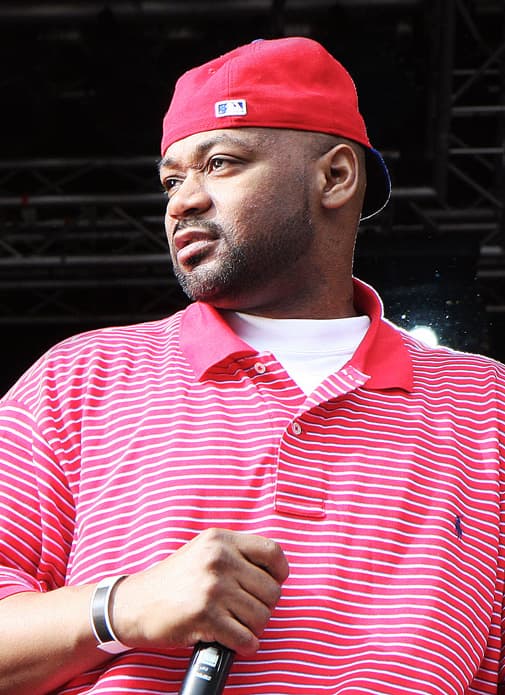
Wu-Tang's Most Vivid Storyteller
Dennis Coles emerged from the Wu-Tang Clan collective with a voice and perspective that would produce some of the most vividly detailed writing in hip-hop history. As Ghostface Killah, he brought a stream-of-consciousness intensity to the microphone that combined street reportage with surrealist imagery in ways that no rapper before him had attempted. His debut solo album, Ironman, arrived in 1996 and established his partnership with Raekwon as one of the most productive creative relationships in the genre. But it was Supreme Clientele in 2000 that cemented his reputation as a writer of uncommon skill. The album's lyrical density and stylistic fearlessness influenced a generation of rappers who recognized that hip-hop writing could aspire to the same complexity as literary fiction. Born and raised in the Stapleton Houses of Staten Island, Ghostface carried the authenticity of his environment without being limited by it. His writing ranges from the mafioso narratives of Cuban Linx to the heartbreaking vulnerability of All That I Got Is You, demonstrating an emotional range that many of his Wu-Tang peers never explored. Across a solo catalog that spans over a dozen albums and countless features, he has maintained a creative standard that makes him one of the most respected MCs in hip-hop history.
Stream-of-Consciousness Brilliance
Ghostface Killah's writing style defies easy categorization. His verses unfold with a logic that is internally consistent but requires active engagement from the listener to follow. He layers specific details, brand names, food references, neighborhood geography, and emotional shifts into patterns that reward repeated listening. A single Ghostface verse might reference a specific corner in Staten Island, a designer garment, a childhood memory, and a threat to a rival, all connected by an associative logic that mirrors how the mind actually processes experience. His delivery complements this writing approach. His voice carries a natural urgency and emotional weight that makes even abstract passages feel grounded in real experience. The speed of his delivery varies dramatically, from measured storytelling cadences on tracks like Shakey Dog to the rapid-fire assault of his most intense verses. His chemistry with Raekwon created one of hip-hop's great collaborative partnerships. Their tandem performances on the Cuban Linx albums and across each other's solo catalogs demonstrate how two distinct voices can elevate each other. Where Raekwon's delivery is precise and cinematic, Ghostface's is explosive and impressionistic, creating a contrast that keeps listeners engaged across extended narrative tracks. RZA's production on his early solo work provided the perfect sonic backdrop for his dense lyricism, with sample choices that matched the nostalgic and gritty qualities of his writing.
A Solo Catalog Built on Consistency
Ironman in 1996 established Ghostface as a viable solo artist within the Wu-Tang framework, with the album's soulful production and emotional depth distinguishing it from the harder-edged solo debuts of his clanmates. Supreme Clientele in 2000 was the breakthrough that critics had anticipated, arriving with a creative ambition that made it an instant classic. The album's influence on underground and alternative hip-hop was immediate and lasting. Pretty Toney Album in 2004 showed a more accessible side, while Fishscale in 2006 represented a return to the street narratives that built his reputation. The Theodore Unit collective and his ongoing collaborations with Raekwon maintained his connection to the Wu-Tang universe while allowing creative independence. His prolific output continued through the 2010s with albums like Apollo Kids and Twelve Reasons to Die, the latter a collaboration with producer Adrian Younge that created a blaxploitation-inspired concept album. Supreme Clientele 2 and ongoing feature appearances have kept him relevant to new audiences while his back catalog continues to gain recognition from critics who rank him among the five or six best lyricists the genre has produced. His career demonstrates that creative integrity and prolific output can coexist without the compromise that many artists face when they attempt to maintain both.
The Writer's Writer of Hip-Hop
Ghostface Killah occupies a specific and revered position in hip-hop: the MC whose work is most admired by other MCs. His influence on narrative rap is comparable to the influence of a literary innovator on subsequent generations of novelists. The vivid specificity of his writing, the way he anchors abstract emotional states in concrete sensory details, created a standard that writers across hip-hop's spectrum have aspired to. Artists from MF DOOM to Action Bronson to Danny Brown have acknowledged his direct impact on their approaches to writing. His emotional vulnerability, particularly on tracks addressing family relationships and personal loss, expanded what was possible for male rappers in hardcore hip-hop contexts. All That I Got Is You, a track about growing up in poverty with his mother, achieved emotional resonance without sacrificing any street credibility, a balance that subsequent generations of rappers have cited as permission to explore similar territory. Within the Wu-Tang Clan's legacy, Ghostface stands as the member whose solo work most consistently matched and at times exceeded the quality of the group's collective output. Supreme Clientele is frequently cited alongside Liquid Swords and Only Built 4 Cuban Linx as the pinnacle of Wu-Tang solo achievements. His body of work argues convincingly that he is one of the ten or fifteen most important writers hip-hop has produced.